Many people assume that if they slip and fall on someone else's property, the property owner is automatically responsible. Florida law does not work that way. In most cases, the injured person must prove the property owner knew or should have known about the dangerous condition before the fall occurred.
This legal requirement is known as notice, and it often determines whether a slip and fall claim succeeds. Even when there is clear evidence of a hazard, such as a puddle on the floor or debris in an aisle, the claim may fail without proof that the business had actual or constructive knowledge of the condition.
If you were injured in a store, restaurant, or other property, speaking with a slip and fall accident attorney can help you understand how the notice requirement applies to your slip and fall case in Florida. Englander Peebles represents injured people in premises liability cases throughout the region and offers free consultations.
Key Takeaways About the Notice Requirement for Slip and Fall Cases in Florida
- Florida law requires you to prove that the property owner had actual or constructive knowledge of the hazardous condition before your fall, not just that the hazard existed.
- Constructive knowledge may be proven by showing the hazard lasted long enough that a reasonable owner would have found it, or that the condition occurred regularly and was foreseeable.
- Surveillance footage, inspection logs, and prior incident reports often serve as the most effective forms of evidence for establishing what the property owner knew and when.
- The property owner's inspection and maintenance schedule, or the lack of one, frequently becomes the central focus of the notice dispute.
- Without evidence of notice, a slip and fall claim in Florida may fail regardless of how serious the injury is.
What Does the Notice Requirement Mean in a Florida Slip and Fall Case?
Florida Statute 768.0755 governs premises liability for injuries caused by transitory foreign substances on business property. Under this statute, the injured person must prove that the business had actual or constructive knowledge of the dangerous condition and failed to take action to remedy it.
A transitory foreign substance is any temporary or unexpected substance on a surface that may cause a slip, trip, or fall, such as a spilled liquid, a dropped piece of produce, or a leaking refrigeration unit.
Why the Burden Falls Entirely on the Injured Person
Florida law places the burden of proving notice squarely on the person who fell. The property owner does not need to prove they lacked knowledge.
Instead, you must affirmatively show they either knew about the hazard or had enough opportunity to discover it through reasonable care. This distinction matters because it means a serious injury alone does not establish liability.
You might have a fractured hip from falling on a wet floor in a Fort Lauderdale grocery store, but if you have no evidence showing the store knew or had reason to know the floor was wet, the claim may not survive a motion to dismiss. The notice requirement functions as a gatekeeper, and clearing it requires specific, documented proof.
How Do You Prove Actual Notice vs Constructive Notice in a Florida Slip and Fall?

The two paths to satisfying the notice requirement produce very different types of evidence. Actual notice requires proof that the property owner or an employee directly knew about the specific hazard. Constructive notice requires proof that the hazard lasted long enough, or occurred often enough, that a reasonable owner exercising ordinary care would have discovered it.
What Constitutes Actual Notice in a Slip and Fall Claim
Actual notice is the more straightforward of the two, but it is also less common. It requires direct evidence that someone in the property owner's organization knew about the specific condition that caused your fall.
The following types of evidence may establish actual notice in a Florida slip and fall case:
- An employee who saw the spill or hazard and either failed to clean it up or failed to place a warning sign
- A customer complaint or verbal report about the condition made to a manager or staff member before the fall
- A written incident report documenting the same hazard at the same location on a prior occasion
- A work order or maintenance request submitted before the fall that specifically references the condition
Actual notice cases tend to produce cleaner liability arguments because they remove the question of whether the property owner had enough time to discover the hazard. The evidence directly shows they already knew.
What Constitutes Constructive Notice Under Florida Statute 768.0755
Constructive notice often determines the outcome of Florida slip and fall cases. Under Florida Statute 768.0755, it may be proven in two ways.
First, the injured person may show the dangerous condition existed long enough that the business should have discovered it through ordinary care. Evidence may include surveillance footage, witness testimony, or physical signs that the hazard had been present for some time, such as footprints, debris, or partially dried liquid.
Second, constructive notice may be shown if the condition occurred regularly and was therefore foreseeable. Examples include repeated spills at a self-serve drink station, water accumulation in produce areas from misting systems, or wet entryways during rainy weather.
Why Do Inspection Logs and Maintenance Records Matter So Much in a Slip and Fall Claim?
The property owner's own records often become the most powerful evidence in a notice dispute. Inspection logs, cleaning schedules, and maintenance records reveal whether the business had a reasonable system for discovering hazards and whether employees actually followed it.
What These Records Reveal About the Property Owner's Knowledge
A business that conducts floor inspections every 30 minutes and documents them creates a paper trail that works in two directions.
If the logs show an inspection took place ten minutes before your fall and noted no hazard, the defense may argue constructive notice is unlikely. But if the logs show a two-hour gap between inspections, or if the business has no logs at all, that failure to inspect may itself support constructive knowledge.
The following types of internal records frequently become central evidence in Fort Lauderdale slip and fall claims:
- Floor inspection logs with timestamps showing the frequency and thoroughness of routine checks
- Cleaning and maintenance schedules that indicate whether the business followed a consistent protocol or operated without one
- Prior incident reports documenting falls or complaints involving the same hazard or the same area of the property
- Employee training records showing whether staff received instruction on hazard identification and response procedures
- Work orders or repair requests that went unaddressed for days or weeks before the fall occurred
The absence of records may be just as telling as the records themselves. A business that operates without any documented inspection routine may face a difficult argument that it exercised ordinary care in maintaining its premises.
How Do Property Owners and Insurance Companies Fight the Notice Requirement?
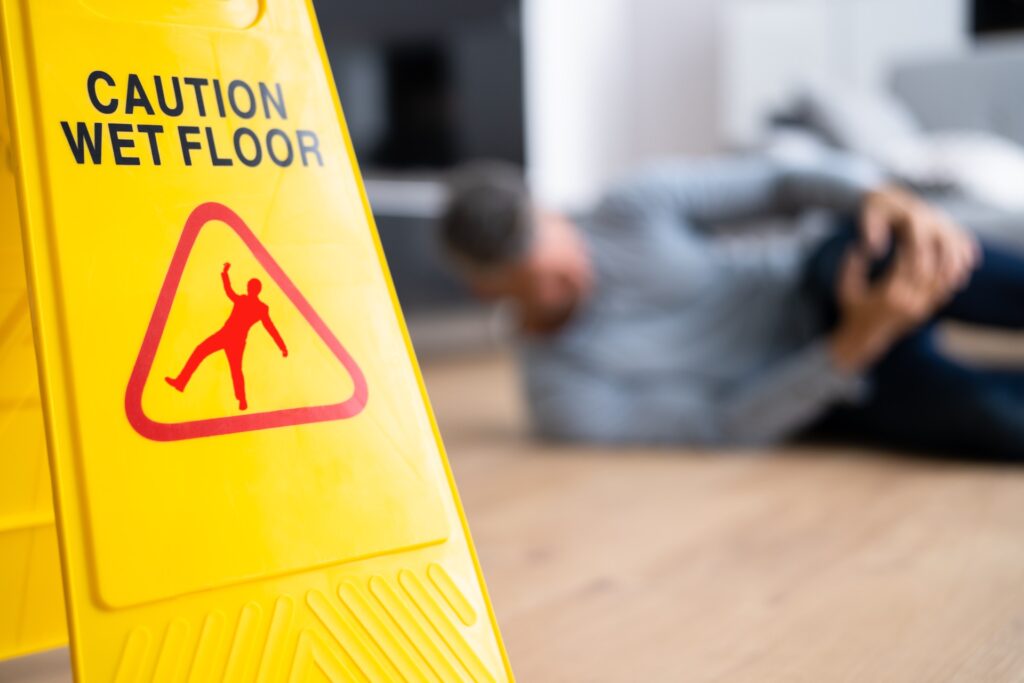
Property owners and their insurers rarely concede knowledge of a hazardous condition. Instead, they deploy several common strategies designed to undermine the injured person's ability to satisfy the notice requirement under Florida law.
Common Defense Tactics in a Florida Slip and Fall Notice Dispute
Insurance adjusters and defense attorneys typically focus their arguments on the following approaches to defeat a notice claim:
- Arguing the hazard existed for only seconds before the fall, making it impossible for the business to have discovered it through reasonable inspection
- Producing inspection logs for a slip and fall claim that show an employee checked the area shortly before the incident, even when those logs lack detail or appear incomplete
- Claiming the injured person caused or contributed to the hazard, such as by dropping a substance and then slipping on it
- Asserting that the hazard was open and obvious, shifting focus away from the property owner's knowledge and toward the injured person's own awareness
These defense strategies target the weakest link in most slip and fall claims, which is the gap between proving a hazard existed and proving the property owner knew about it. Strong evidence of hazard duration, inspection failures, and recurring conditions directly counters each of these arguments.
What Evidence Helps Prove a Store Knew About a Spill or Hazard Before Your Fall?
Proving a store knew about a spill in Fort Lauderdale or anywhere in Broward County requires connecting specific evidence to a timeline. The goal is to show either that the store had direct knowledge or that the condition persisted long enough to create constructive knowledge under Florida Statute 768.0755.
Physical Clues and Circumstantial Hazard Duration Evidence
When surveillance footage is unavailable, the physical condition of the hazard may help show how long it was present. Courts have considered factors such as whether a liquid spread across the floor, partially dried, contained footprints or cart tracks, or had debris mixed into it. These details may indicate the hazard remained on the floor long enough that a reasonable property owner could have discovered it during a routine inspection.
Witness observations may also support proof of notice. A customer who saw the spill minutes before the fall, or an employee who walked past the area without addressing it, may provide testimony showing the hazard existed long enough for the property owner to have discovered it.
How Englander Peebles Helps Prove Notice in a Fort Lauderdale Slip and Fall Case

The notice requirement makes slip and fall cases heavily dependent on evidence. The issue is not only whether a hazard existed, but whether the property owner knew about it or failed to discover it through proper inspections. Englander Peebles represents injured people in Fort Lauderdale, Miami, and across Broward County in premises liability cases involving this issue.
Attorneys Who Investigate the Property Owner’s Knowledge
Founding attorneys Gary Englander and Warren Peebles handle cases directly. They seek surveillance footage, obtain maintenance records, and question employees under oath to determine what the property owner knew and when. Clients work with their attorney throughout the case.
Preserving Evidence Quickly
Surveillance footage may be overwritten within days. Inspection logs may be changed or discarded, and witness memories fade.
The firm moves quickly to preserve records that show the property owner’s knowledge or failure to inspect. Englander Peebles handles these cases on a contingency fee basis, and clients usually do not pay attorney fees unless the case results in a recovery.
FAQs for Notice Requirement Slip and Fall in Florida
What happens if the store has no surveillance footage of the area where I fell?
The absence of footage does not automatically defeat your claim. Your attorney may rely on other forms of evidence, including witness statements, physical characteristics of the hazard, inspection log gaps, and prior incident reports, to establish that the property owner had constructive knowledge of the dangerous condition.
How long does a hazard need to exist before constructive notice applies?
Florida law does not set a specific time threshold. Constructive notice depends on whether the hazard existed long enough that the property owner, exercising ordinary care, had reason to discover it. Courts evaluate the facts of each case individually, considering the property owner's inspection frequency, the visibility of the hazard, and the foot traffic in the area.
Does the notice requirement apply to all slip and fall cases in Florida?
Florida Statute 768.0755 specifically addresses transitory foreign substances on business premises. Other types of premises liability claims, such as those involving structural defects or permanent conditions, may involve different legal standards. The notice requirement under 768.0755 applies most directly to spills, leaks, debris, and similar temporary hazards in commercial settings.
What if the store had an inspection schedule but employees did not follow it?
A gap between the written policy and actual practice may support your claim. If the store's policy calls for inspections every 30 minutes but the logs show a two-hour gap, that failure to follow its own protocol may demonstrate that the business did not exercise ordinary care in discovering the hazard.
Does Florida's comparative negligence law affect a notice-based slip and fall claim?
Yes. Under Florida Statute 768.81, the property owner may argue you share fault for the fall. If you are assigned more than 50% of the fault, your claim may be barred entirely. If your share is 50% or less, your recovery is reduced by that percentage.
The notice analysis and the comparative fault analysis often overlap, because the property owner's defense may argue both that they lacked knowledge and that you failed to watch where you were walking.
Take Action Now to Prove the Notice Requirement in Your Fort Lauderdale Slip and Fall Case
The evidence that proves a property owner's knowledge of a hazard is the same evidence that disappears fastest. Surveillance footage may be overwritten within days. Inspection logs may be revised or lost. Witnesses may leave and become unreachable. Every hour that passes without a legal team working to preserve these records makes the notice requirement harder to meet.
Englander Peebles represents injured people across Fort Lauderdale and Miami in slip and fall cases where the notice requirement is the central issue. Contact the firm today for a free consultation and begin building the evidence your case needs before it disappears.