
Florida’s Legal Framework for Bike Accidents
Under Florida law, bicycles are treated as vehicles. Drivers have a legal duty to share the road and operate their vehicles safely around cyclists. When they don't—and a crash happens—injured cyclists may have the right to file a personal injury claim. To prove liability in a bike accident case, four elements are required: duty of care, breach of duty, causation, and damages. These elements form the legal foundation of a negligence claim. Even if the driver didn’t intend to cause harm, their failure to follow traffic laws or pay attention behind the wheel may be enough to hold them legally responsible. Florida law applies equally to all vehicles on the road, including bicycles. That means cyclists must also follow rules like stopping at red lights and using proper lighting at night. But when drivers violate these same rules and injure someone, liability often follows.Common Scenarios That Lead to Bicycle Accident Lawsuits
Certain types of driver behavior are known to put cyclists at greater risk—especially in congested areas like downtown Fort Lauderdale, Little Havana, and along A1A in Miami Beach. These incidents often stem from careless or unlawful driving and can form the foundation of a strong personal injury claim.Right Turn Conflicts (Right Hooks)
Drivers turning right across bike lanes or shoulders often collide with cyclists traveling straight. These crashes tend to occur at intersections like Sunrise Boulevard and Federal Highway in Fort Lauderdale, where traffic signals may not include designated bicycle crossings. A cyclist has the right of way in most of these situations, but many drivers fail to check blind spots or signals.Dooring Incidents
In urban districts like Wynwood or Las Olas, where street parking is tight, drivers and passengers sometimes open doors into the path of an oncoming cyclist. This sudden barrier offers little time to react and frequently leads to serious injury. Florida law holds vehicle occupants responsible for checking before opening doors into traffic, including bike lanes.Failure to Yield at Intersections
When drivers don’t yield at crosswalks or stop signs—particularly in neighborhoods with mixed traffic like Coconut Grove or Victoria Park—they risk striking cyclists legally crossing the road. These types of violations are clear examples of negligence under Florida traffic law and often involve both vehicle code and right-of-way violations.Distracted Driving
From texting and driving on Biscayne Boulevard to checking navigation apps in downtown Hollywood, distracted drivers frequently miss seeing cyclists in bike lanes or crossing roads. Even momentary distraction can lead to a serious impact, and phone records, app usage, or eyewitnesses may help prove liability in these cases.Speeding and Aggressive Driving
Aggressive behavior—tailgating, rapid lane changes, or speeding through intersections—puts cyclists at significant risk, especially on high-speed corridors like US-1 or I-595 access roads. These cases often involve multiple traffic violations and may support claims for both compensatory and punitive damages. Regardless of how the crash happened, strong documentation makes a difference. Evidence such as:- Witness statements
- Dashcam or surveillance footage
- Photographs of the scene and damage
- Police citations issued at the scene
What Happens If the Driver Blames You?
It’s not unusual for drivers to argue that the cyclist caused or contributed to the crash. Fortunately, Florida follows a modified comparative fault system. Even if you were partially at fault (but not more than 50%), you may still recover compensation, though your damages will be reduced by your percentage of fault. Comparative fault often comes into play in cases involving unclear intersections or situations where the cyclist may not have used a designated lane. Even then, the driver must show proof of the cyclist’s responsibility. That’s why documentation—video evidence, photographs, GPS data, and witness reports—can make or break your case. Insurance companies routinely try to shift blame to reduce payouts. An experienced accident and injury lawyer will understand these tactics and help prepare counterevidence to challenge exaggerated or unfounded claims.What You Might Recover in a Bicycle Accident Claim
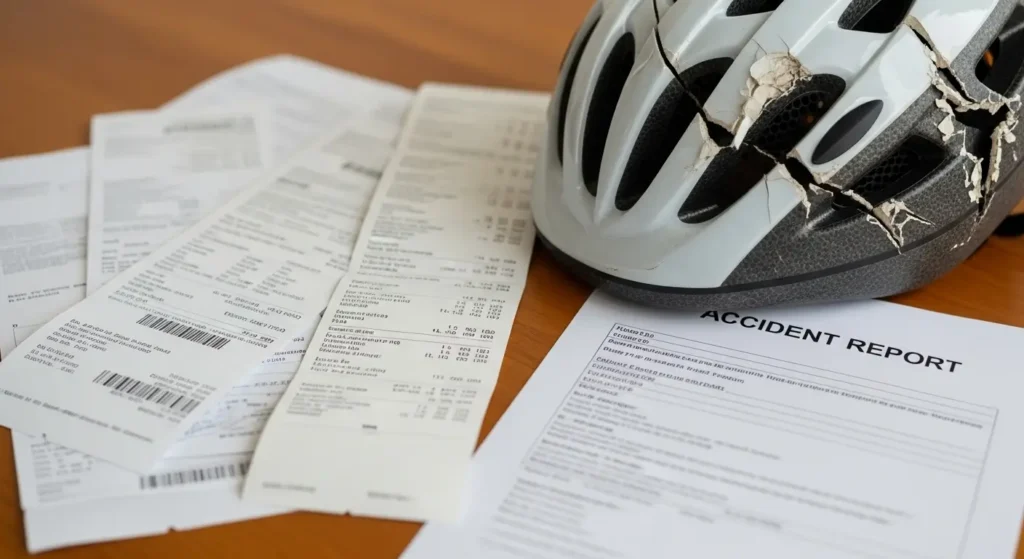 Every accident is different, but most bicycle accident lawsuits involve both economic and non-economic damages. Depending on the situation, your claim could include:
Economic Damages
- Medical Bills
- Lost Income
- Loss of Earning Capacity
- Property Damage
Non-Economic Damages
- Pain and Suffering
- Mental Distress
- Loss of Enjoyment
Punitive Damages
If the driver acted with gross negligence or intentional misconduct—such as driving under the influence—punitive damages may be available, subject to Florida’s statutory requirements. These are meant to punish bad conduct and deter similar behavior in the future. Calculating damages accurately is critical. A qualified personal injury lawyer can help estimate both current and future losses and work with medical experts to support your case.Insurance Claim or Lawsuit: What’s the Difference?
After a bike accident, most injured cyclists first deal with insurance. That could be your own PIP (Personal Injury Protection) policy or the at-fault driver’s liability coverage. While this is often the first step, it doesn’t always lead to full compensation.Filing an Insurance Claim
Insurance claims are typically faster but more limited. Florida’s no-fault system means your PIP policy may cover some of your medical bills and lost wages—up to $10,000. Not all cyclists will have PIP coverage; it generally only applies if the injured cyclist or a relative they live with has an active auto insurance policy. However, serious injuries often exceed that cap, and PIP does not cover pain and suffering. To recover for pain and suffering and other non-economic damages in a motor vehicle accident, Florida law generally requires that the injured party meet the serious injury threshold. You can also file a claim with the driver’s insurance company. If they accept fault, they may offer a settlement. But insurers are in the business of protecting their bottom line. It’s common to receive lowball offers or have valid claims denied.When a Lawsuit Makes Sense
If the insurer refuses to offer a fair settlement or denies liability altogether, filing a lawsuit may be your next move. A personal injury lawsuit allows you to:- Pursue full compensation beyond policy limits
- Include non-economic damages like physical and emotional hardship
- Compel evidence through legal discovery
- Involve medical and accident reconstruction experts
Time Limits: How Long Do You Have to Sue?
Florida law gives injured cyclists two years from the date of the accident to file a personal injury lawsuit. This two-year statute of limitations reflects recent changes under House Bill 837, which went into effect on March 24, 2023. Prior to this change, injured parties had four years to file a negligence-based claim. If your accident occurred before that date, the longer time frame may still apply, depending on the specific facts and timing of your case. Regardless of which timeline applies, the statute of limitations is strict. Missing the deadline could result in losing your right to compensation, no matter how strong your claim may be. There are a few exceptions, such as if the injured person was a minor at the time of the crash or if the at-fault party left the state. The best course of action is to consult a South Florida accident attorney as soon as possible to determine which deadline applies and preserve your rights. Preserving evidence becomes harder over time. Traffic camera footage may be erased. Witnesses may forget key details. Medical records could get buried under months of treatment. Acting quickly improves your case’s strength and credibility.After the Crash: What to Do Once You’re Home
When you’re back home and beginning to recover, there are a few practical steps that can support your case down the road:- Photograph Everything: Injuries, bike damage, helmet dents, road rash—document it all, and keep taking photos as you heal.
- Keep a Recovery Journal: Write down how you feel daily—physically and emotionally. This helps demonstrate pain and suffering.
- Track Expenses: Include not just medical bills, but mileage to appointments, out-of-pocket medication, and even bike repair costs.
- Be Cautious with Communication: Don’t give recorded statements to the driver’s insurance company without legal advice.
- Stay Off Social Media: Avoid posting anything about your health, your activities, or the accident. Insurance companies monitor posts.
Why South Florida Cyclists Face Higher Risks
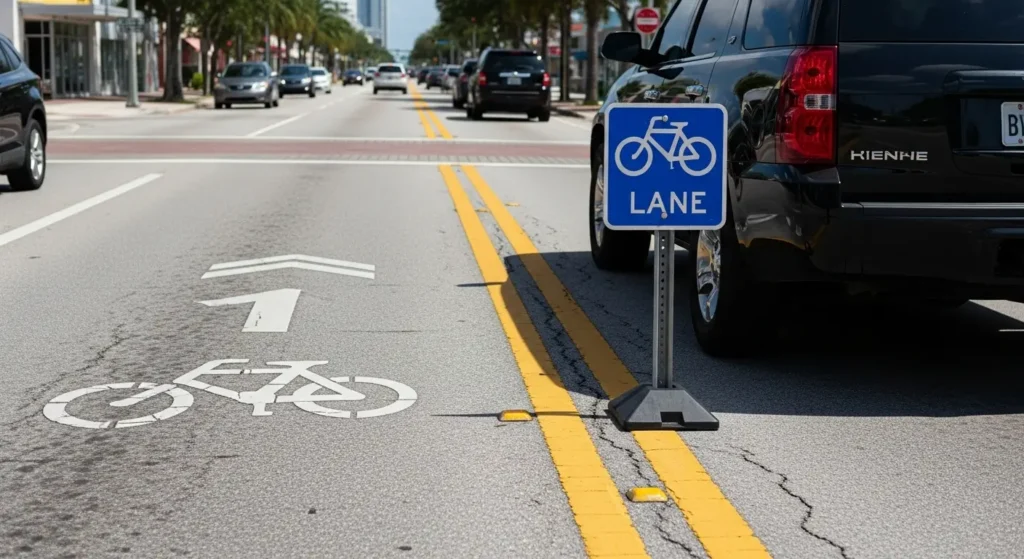 While every bicycle accident is unique, certain regional factors make riding in South Florida particularly hazardous—and understanding these risks is crucial when evaluating liability and building a strong legal claim.