If you or a loved one were hurt in a truck crash on I-95 in Fort Lauderdale, multiple parties may share liability, including the truck driver, the trucking company, a cargo loader, a vehicle manufacturer, or another motorist. Determining fault after a semi truck accident in Fort Lauderdale requires examining federal safety regulations, Florida negligence law, and your collision's specific facts. Truck accident cases along the I-95 corridor through Broward County are more complex than typical car crashes because commercial carriers must follow both state and federal rules, and violations can open claims against several defendants.
If you were injured in a truck wreck on I-95 in Florida, Englander Peebles is here to help. Call us at 954-226-9134 or contact us now for a free consultation.
Why Truck Accidents on I-95 in Broward County Involve Multiple Liable Parties
Commercial truck crashes differ from ordinary car accidents because the trucking industry operates under layers of state and federal regulation, and several parties play a role in getting a truck safely down I-95. The driver controls the vehicle, but the trucking company selects that driver, sets schedules, and maintains the fleet. A third-party maintenance shop may service the brakes. A cargo shipper or loader may have overloaded or improperly secured freight. Each party owes a duty of care, and failure by any one can contribute to a catastrophic collision.
Under Florida law, fault is divided among all responsible parties based on each party's percentage of responsibility. FL § 768.81(3) requires courts to enter judgment against each liable party according to that party's share of fault. This means your Broward County truck crash claim may name multiple defendants in a single lawsuit.
💡 Pro Tip: After any truck collision on I-95, write down every company name you see on the truck, trailer, and any signage. Trucking companies, brokers, and leasing firms are often separate entities, and identifying them early helps your attorney determine every potentially liable party.
How Federal and State Regulations Create Liability After a Truck Accident in Ft Lauderdale
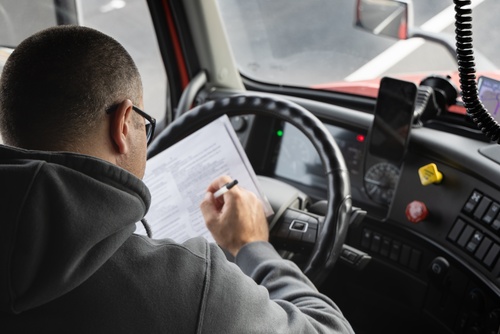
All commercial motor vehicles operating on Florida highways in interstate commerce must comply with federal FMCSA safety regulations under 49 C.F.R. parts 382-386 and 390-397, as required by FL § 316.302(1)(a). These federal standards cover hours-of-service limits, vehicle inspection requirements, driver qualification standards, and drug and alcohol testing. A violation of these rules can establish negligence per se in a Florida truck accident claim, meaning the violation itself may prove negligence.
Hours-of-Service and Driver Fatigue
Truck driver fatigue is a leading cause of serious crashes on highways like I-95. Federal hours-of-service rules cap consecutive hours a trucker can drive before taking a mandatory rest break. When a trucking company pressures drivers to exceed those limits or falsify electronic logging device records, the company shares liability for any resulting crash. Violations documented in driver logs or black box data provide powerful evidence.
Vehicle Maintenance and Inspection Failures
Federal regulations require regular inspections and maintenance of commercial trucks, including brakes, tires, lights, and coupling devices. If a truck accident occurs in Fort Lauderdale because of a mechanical failure that proper maintenance would have prevented, the trucking company or third-party maintenance shop may be liable. Florida law requires drivers in crashes causing injury, death, or property damage of at least $500 to immediately notify law enforcement under FL § 316.065(1). That crash report becomes foundational evidence to establish fault.
💡 Pro Tip: Request a copy of the official crash report from the Florida Highway Patrol or Fort Lauderdale Police as soon as it becomes available. This document can reveal critical details about the truck's condition, the driver's status, and the responding officer's observations.
Trucking Company Liability in Florida: Negligent Hiring and Beyond
A trucking company can be held directly liable if it failed to properly vet its driver. Under FL § 768.096(1), an employer is presumed not negligent in hiring if it conducted a background investigation that did not reveal information reasonably demonstrating the applicant's unsuitability. The qualifying investigation must include a criminal history check obtained from the Florida Department of Law Enforcement (FDLE) as reflected in the Florida Crime Information Center system, reasonable efforts to contact former employers and references, a job application disclosing prior criminal convictions and prior involvement as a defendant in civil actions for intentional torts, and a driver's license check with written authorization only when driving is relevant to the position. If a trucking company skipped these steps and hired a driver with a dangerous record, that failure becomes a direct basis for liability.
Respondeat Superior and Vicarious Liability
Beyond negligent hiring, trucking companies may face vicarious liability for their drivers' actions under respondeat superior. This legal principle holds an employer responsible when an employee causes harm while acting within the scope of employment. Because truck drivers on I-95 are typically performing work duties when a crash occurs, the carrier often bears financial responsibility alongside the driver.
💡 Pro Tip: Do not give a recorded statement to the trucking company's insurance adjuster before speaking with an attorney. Adjusters may attempt to shift blame onto you, which can directly affect your recovery under Florida's comparative fault rules.
How Florida's Comparative Fault System Affects Your Truck Crash Claim on I-95
Florida follows a modified comparative fault system that can significantly impact what you recover after a truck accident in Ft Lauderdale. Under FL § 768.81(6), if you are found greater than 50% at fault for your own injuries, you are barred from recovering any damages. If your fault is 50% or less, your recovery is reduced by your percentage of responsibility. This makes it essential to work with an attorney who can thoroughly document the trucking company's or driver's negligence.
Trucking companies and their insurers frequently argue that the injured person contributed to the crash. Building a strong evidentiary record early through photos, witness statements, electronic data from the truck, and the official crash report is critical to protect your claim.
What Damages Can You Recover After a Truck Accident in Ft Lauderdale?
Victims of I-95 truck crashes may be entitled to both economic and non-economic compensatory damages. Economic damages cover quantifiable financial losses such as medical bills, lost income, and property damage. Non-economic damages address subjective harm like pain and suffering and emotional distress.
| Damage Category | Examples |
|---|---|
| Economic Damages | Medical expenses, lost wages, future earning capacity, property repair or replacement |
| Non-Economic Damages | Pain and suffering, emotional distress, loss of enjoyment of life, loss of consortium |
| Punitive Damages (limited cases) | Available when conduct involves gross negligence, recklessness, or intentional misconduct |
Punitive damages may also be available in cases involving particularly egregious conduct. These damages punish a defendant and deter similar behavior. Courts generally require proof of serious misconduct, such as a trucking company knowingly allowing an unqualified driver to operate a vehicle or deliberately falsifying safety records.
Insurance Minimums and Why They Matter
Federal law requires most truckers carrying general freight across state lines to maintain at least $750,000 in liability insurance. Lifetime medical costs after a serious crash can quickly exceed that amount, making it critical to identify all liable parties and available insurance policies. A Fort Lauderdale truck accident lawyer can investigate whether additional coverage exists through the carrier, a broker, or a shipper.
💡 Pro Tip: Keep every medical bill, receipt, and record of missed work from the day of the crash forward. Thorough documentation strengthens both economic and non-economic damage claims.
The Two-Year Filing Deadline and Why You Should Act Quickly
Florida law gives you two years from the date of a truck accident to file a personal injury lawsuit, or two years from the date of death for a wrongful death claim, under FL § 95.11. Missing this deadline generally means losing your right to seek compensation entirely. Florida previously allowed four years for negligence claims, but the 2023 tort reform law shortened that window for claims accruing on or after March 24, 2023.
Limited Exceptions to the Filing Deadline
Florida law allows the statute of limitations to be tolled under narrow circumstances defined in FL § 95.051(1). These include situations where the at-fault party uses a false name to evade service or is absent from Florida. Tolling may also apply when an injured person is a minor or is legally incapacitated. However, courts interpret these exceptions narrowly, and you should not assume any exception applies without consulting an attorney.
💡 Pro Tip: Even if you are unsure whether you have a case, contact a truck accident attorney well before the two-year deadline. Early legal involvement preserves evidence like electronic logging data, which trucking companies may overwrite or destroy if not promptly requested.
Frequently Asked Questions
1. Who can be held liable for a semi truck accident in Fort Lauderdale?
Multiple parties may share liability, including the truck driver, the trucking company, a cargo loader or shipper, a vehicle or parts manufacturer, and a third-party maintenance provider. Florida law apportions fault among all responsible parties under FL § 768.81(3). An attorney can investigate your crash to identify every party whose negligence contributed to your injuries.
2. How long do I have to file a lawsuit after a truck crash on I-95 in Broward County?
You generally have two years from the date of the accident to file a personal injury claim, or two years from the date of death for a wrongful death claim, under FL § 95.11. Limited tolling exceptions exist, but courts apply them narrowly. Acting quickly is important because truck accident cases require complex evidence gathering.
3. What if I was partially at fault for the I-95 truck collision?
Under Florida's modified comparative fault system, you can still recover damages as long as you were not greater than 50% at fault. Your compensation will be reduced by your percentage of responsibility. If you are found greater than 50% at fault, FL § 768.81(6) bars you from recovering damages.
4. Can a trucking company be liable even if the driver was an independent contractor?
In many cases, yes. Trucking companies may face direct liability for negligent hiring, negligent maintenance, or violations of federal safety regulations regardless of the driver's employment classification. Florida courts examine the degree of control the company exercised over the driver and vehicle, and federal regulations often impose duties directly on the motor carrier.
5. What types of compensation can I pursue after a truck wreck on I-95?
You may be entitled to economic damages like medical bills and lost wages, non-economic damages such as pain and suffering, and in limited cases, punitive damages for egregious misconduct. The specific damages available depend on the severity of your injuries and the conduct of the at-fault parties.
Protect Your Rights After a Fort Lauderdale Truck Crash
If you were involved in a truck crash on I-95, time is not on your side. Florida's two-year filing deadline, the complexity of identifying multiple liable parties, and the risk of lost evidence all make early legal action critical. Understanding how Florida's comparative fault rules, federal trucking regulations, and insurance requirements intersect is essential to building the strongest possible claim.
Contact Englander Peebles today. Call 954-226-9134 or reach out to us online for a free consultation. Reach out to our Fort Lauderdale personal injury attorneys.