The Digital Paper Trail Behind Every Fort Lauderdale Rideshare Crash
Key Takeaways: Every Uber ride creates an electronic record, GPS coordinates, timestamps, speed and braking data, route history, and driver app status, that can help establish fault after a Fort Lauderdale crash. A key detail is often which of the four app phases the driver was in at impact, since each phase may trigger a different insurance layer, from a personal auto policy to the at least $1 million in liability coverage Florida requires during a prearranged ride. Trip data is strongest when paired with crash reports, video, event data recorder downloads, medical records, witness statements, and phone usage logs. That proof matters under Florida's modified comparative negligence rule, where a party found more than 50 percent at fault generally may not recover damages. Deadlines compound the urgency: Florida's negligence limitations period was shortened to two years for claims accruing on or after March 24, 2023, and telematics or video may be lost within days unless preservation letters go out quickly. Because PIP is capped and rarely covers a serious injury in full, early evidence preservation can be important to a liability claim.
Every Uber ride generates an electronic record: GPS coordinates, timestamps, speed readings, route history, driver app status, and the exact moment a trip started or ended. After a crash on Federal Highway, Las Olas Boulevard, or I-95 through Broward County, that record may answer questions no witness can, showing whether the driver was logged in, speeding, braking, or carrying a passenger at impact. This data can become one of the most objective pieces of proof in a fault dispute, sometimes the difference between a denied claim and a fully documented one.
If you were hurt in a rideshare collision anywhere in South Florida, the clock on that data may already be running. The attorneys at Englander Peebles know how to send preservation demands before records cycle out of the system. Call 954-226-9134 or contact us now to talk with someone who handles these claims every week.
What Uber Actually Records During a Ride
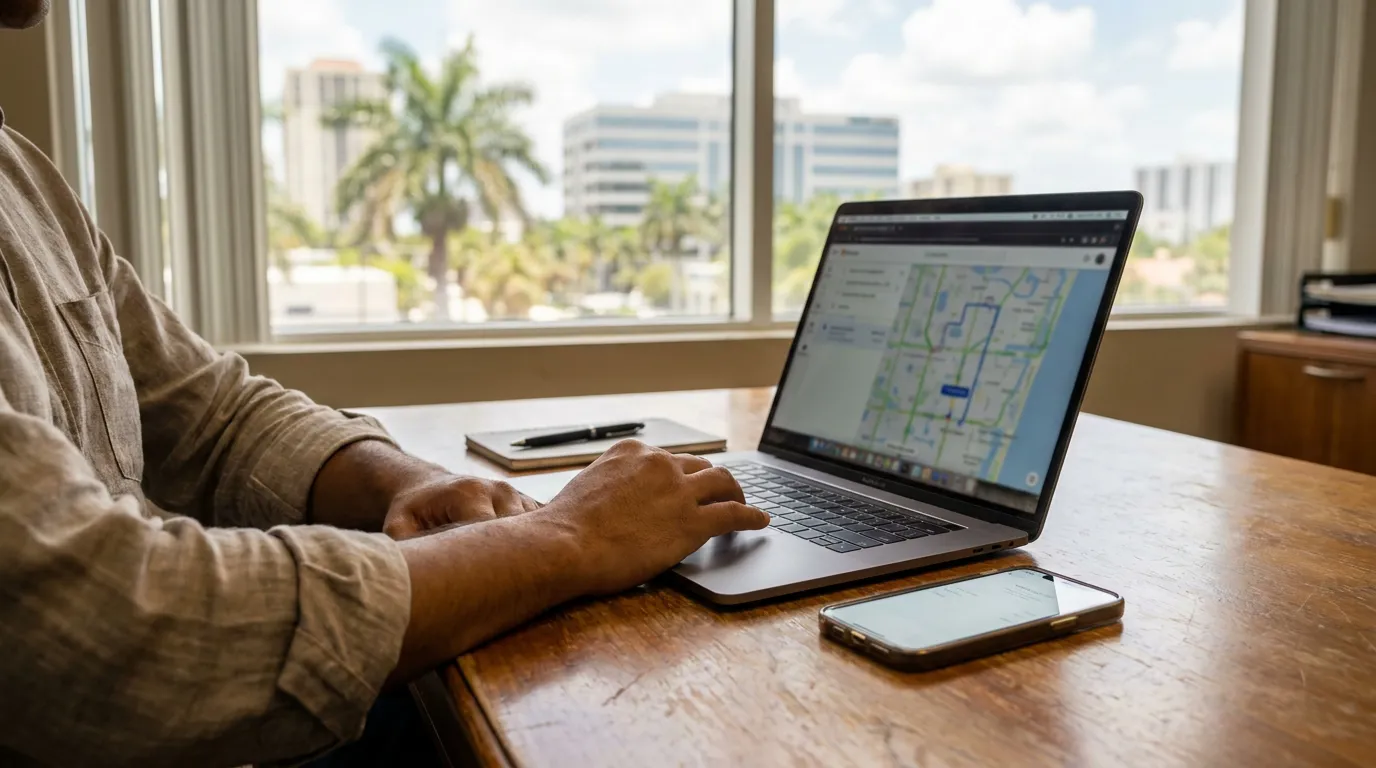
Uber's platform typically logs far more than a pickup address and a fare. The app tracks location at frequent intervals, calculates speed, records acceleration and hard-braking events on many devices, and stamps every status change with a precise time. It also stores driver history, passenger ratings, ride acceptance patterns, and the digital handshake that begins and ends each trip. Precision and retention vary by device, app version, and company policy.
This information may fill gaps a police report cannot. Crash reports rely on officer observations and driver statements, and under Fla. Stat. § 316.066 crash reports and statements are subject to limits on use as evidence. Digital records generally reflect what the vehicle and phone were doing in real time, which is why analysts studying traffic causation increasingly lean on telematics. Research organizations like the AAA Foundation for Traffic Safety study distraction and driver behavior, showing how this kind of evidence can corroborate real-world crash causes.
The Four App Phases That Change Everything
Liability in a rideshare case often turns on which "period" the driver was in at impact. The four recognized phases are: offline, logged in and waiting, en route to pick up a passenger, and actively transporting a rider. Under Fla. Stat. § 627.748(1)(b), a "prearranged ride" begins when the driver accepts a request and ends when the last rider exits, so the en route and passenger phases fall under the same statutory coverage tier. Each phase may trigger a different insurance layer, and trip data often helps establish which one applied.
| Driver App Status | Typical Coverage Layer | Why Trip Data Matters |
|---|---|---|
| App off | Driver's personal auto policy | May show no active connection to platform |
| Logged in, no ride accepted | Statutory minimums of at least $50,000/$100,000/$25,000, plus PIP and UM | Timestamps may confirm availability window |
| En route to pickup | Prearranged-ride coverage of at least $1 million | Acceptance log may show the prearranged ride began |
| Passenger in vehicle | Prearranged-ride coverage of at least $1 million | Ride start/end record may confirm active trip |
Insurers rarely volunteer this information. If the data shows the app was off, the carrier may point you to a personal policy with minimal limits, and many personal policies exclude livery use. If it shows an accepted trip, the higher prearranged-ride layer may apply, subject to the policy's terms. Our discussion of Uber and Lyft accident liability walks through how these coverage tiers can interact in Broward and Miami-Dade cases.
Why Florida Law Treats Digital Records as Serious Evidence
Florida's statutory framework reflects broad comfort with verified electronic records. Fla. Stat. § 322.20(5) requires the Department of Highway Safety and Motor Vehicles to test automated procedures "to ensure that the integrity of the driver file is enhanced or maintained," including electronically recorded data transmitted between courts and the department. That provision addresses driver and citation records, not rideshare apps, and sets no admissibility standard; admissibility still depends on authentication under Chapter 90.
A closer analogy appears in Florida's peer-to-peer car-sharing statute. Fla. Stat. § 627.7483(3)(a)3.a. shifts liability to the car-sharing platform when "a dispute exists over who was in control of the shared motor vehicle at the time of the loss" and the platform fails to provide required information. That statute doesn't apply to TNCs like Uber, but it shows the Legislature recognizing that control of a shared vehicle is often answered by platform records, similar logic that helps explain why Uber's trip logs sit at the center of fault disputes.
Transportation network companies operate under their own Florida statutory framework. Fla. Stat. § 627.748 governs TNC insurance requirements, driver background screening, and recordkeeping, and largely preempts local regulation of TNCs.
💡 Pro Tip: Screenshot your own Uber receipt, trip map, and driver details from your app history the same day. Your rider-side record is independent of anything the company produces later.
How Trip Data Helps You Prove Fault Under Comparative Negligence
Florida's comparative fault rules make precise fault allocation critical. Under Fla. Stat. § 768.81(6), "any party found to be greater than 50 percent at fault for his or her own harm may not recover any damages." That bar applies to most negligence actions but not to medical negligence claims, so a few percentage points may determine whether a claim survives at all.
This is an area where objective data can affect outcomes. Speed logs, GPS breadcrumbs, and app-engagement timestamps may show what the driver was doing in the seconds before impact, helping rebut an insurer's attempt to shift blame onto an injured passenger, cyclist, or pedestrian. Fla. Stat. § 768.81(1)(c) defines the field broadly: a "negligence action means, without limitation, a civil action for damages based upon a theory of negligence, strict liability, products liability, professional malpractice whether couched in terms of contract or tort, or breach of warranty and like theories," and "the substance of an action, not conclusory terms used by a party, determines whether an action is a negligence action."
Evidence That Pairs Well With Uber GPS Records
Trip data is generally strongest when it corroborates other proof rather than standing alone. In many Broward rideshare claims, attorneys gather:
- The Broward Sheriff's Office or Fort Lauderdale Police crash report
- Nearby business, traffic, or dashcam video before it's overwritten
- Vehicle event data recorder downloads from both cars
- Medical records tying injuries to the mechanism of collision
- Witness statements from passengers and other motorists
- Cell phone usage records where distraction is suspected
Several sources, including EDR downloads governed by the federal Driver Privacy Act of 2015 and Florida case law (including State v. Worsham), and phone records, typically require owner consent, a court order, or formal discovery.
Fault determinations should be grounded in evidence, not assumptions. Fla. Stat. § 626.9541(1)(o)3.a. prohibits an insurer from refusing to renew a policy solely because the insured was in an accident "unless the insurer's file contains information from which the insurer in good faith determines that the insured was substantially at fault." That provision governs nonrenewal rather than liability claim handling, but reflects an expectation that carriers document fault findings with actual information.
The Deadline Problem Nobody Warns You About
Florida shortened the filing window for negligence claims, catching many people off guard. Fla. Stat. § 95.11(5)(a) now provides "WITHIN TWO YEARS.-- (a) An action founded on negligence." That two-year period, enacted by Chapter 2023-15, Laws of Florida, applies to causes of action accruing on or after March 24, 2023; claims accruing before then remain governed by the four-year period in Fla. Stat. § 95.11(3)(a) (2022). Other deadlines differ, such as wrongful death claims or claims against government entities. You can review the current text in Chapter 95 of the Florida Statutes, though this genuinely requires attorney review of your specific dates.
Statutory exceptions exist, but courts often interpret them narrowly. Tolling and delayed-discovery arguments aren't automatic and generally apply only in limited circumstances.
Separately, evidence deadlines can move faster than legal ones. Rideshare platforms aren't obligated to keep granular telematics forever, surveillance footage is often overwritten within days or weeks, and vehicles get repaired or salvaged. A qualified Uber trip data evidence after crash lawyer can issue spoliation and preservation letters quickly, which may be the practical difference between having proof and arguing without it, though a letter doesn't itself compel production.
How PIP Fits Into a Broward Rideshare Claim
Florida's no-fault system means your own Personal Injury Protection coverage generally responds first. Under Fla. Stat. § 627.736, PIP typically pays 80 percent of reasonable medical expenses and 60 percent of lost wages up to a $10,000 combined limit, and benefits are generally limited to $2,500 unless a qualified provider diagnoses an emergency medical condition. Coverage also requires initial treatment within 14 days of the crash. Passengers in an Uber may look to their own PIP, a resident relative's policy, or other coverage, including the PIP the TNC policy must provide.
PIP alone rarely covers a serious injury in full. Seeking full medical expenses, future care, lost earning capacity, and pain and suffering usually requires pursuing the at-fault party and any applicable liability layers; noneconomic damages require meeting the permanent injury threshold in Fla. Stat. § 627.737(2). That brings fault proof back to center stage, one reason Uber crash evidence gathered early tends to shape a case's trajectory.
Frequently Asked Questions
1. Can I get Uber's trip data myself after a crash?
You can generally access your own rider history, receipts, and trip maps directly in the app. Detailed driver-side telematics and internal records generally require a formal request, preservation demand, or subpoena issued through a claim or lawsuit. Riders typically cannot obtain the driver's speed and engagement data on their own.
2. What if the Uber driver says the app was off?
Trip records and acceptance logs may contradict that claim. If the platform's data shows an accepted or active prearranged ride, the higher coverage layer may apply depending on circumstances and policy terms. Disputes over app status are common and are often resolved by documents rather than recollection.
3. Does trip data help if I was a pedestrian or cyclist?
It often can be, and may be especially valuable. Pedestrians and cyclists rarely have vehicle data of their own, so GPS and speed records from the rideshare vehicle may supply the timeline. State research such as FIU's study on Florida pedestrian crashes illustrates how crash data is used to identify contributing factors statewide.
4. Will partial fault stop my recovery?
Not necessarily, though it may matter a great deal. For most negligence claims, Florida's modified comparative negligence rule reduces damages by your percentage of fault and bars recovery entirely above 50 percent under Fla. Stat. § 768.81(6). Because allocation is fact-dependent and decided by the jury, credible digital evidence may meaningfully affect where the percentages land.
5. How soon should I contact a lawyer?
As soon as you reasonably can, ideally within days. Preservation letters, video canvassing, and witness follow-up are all time-sensitive, and delay tends to shrink the available evidence rather than the legal issues. Outcomes always depend on the specific facts of your situation.
Putting the Data to Work for Your Claim
Fort Lauderdale rideshare crashes are rarely simple. Between layered insurance policies, disputed app statuses, a compressed negligence deadline, and Florida's 50 percent fault bar, the outcome may depend on whether someone moved quickly to lock down objective proof. Uber trip data investigations won't resolve every question, and no attorney can promise a particular result, but verified GPS records, timestamps, and speed logs may give an injured person something adjusters find difficult to dismiss. The sooner that information is preserved, the stronger your position generally may be.
You do not have to sort through app screenshots and insurance letters alone. The team at Englander Peebles helps injured people across Broward, Miami-Dade, and Palm Beach counties build claims on solid evidence. Call 954-226-9134 or request your free case review today. Call us today for a free consultation.
Disclaimer: This content is for informational purposes only and is not legal advice. Every case is unique, and results may vary. Consult an attorney about your specific circumstances.