How Much Can You Expect From a Slip and Fall Settlement in Florida?
There is no single "average" slip and fall settlement amount in Florida because every case depends on its unique facts. Settlement values range from a few thousand dollars for minor soft-tissue injuries to well over six figures for claims involving surgery, permanent disability, or prolonged loss of income. What drives these numbers are injury severity, evidence proving the property owner's negligence, your percentage of fault, and the damages you can document. Broward County slip and fall claim values hinge on how well you and your attorney build the case from day one.
If you were hurt in a slip and fall in Fort Lauderdale or South Florida, Englander Peebles is here to help. Call us at 954-226-9134 or contact us now for a free consultation.
What Determines Average Slip and Fall Settlement Amounts in Florida?
Certain factors consistently influence how much compensation an injured person may recover. Understanding these factors helps you set realistic expectations and take the right steps to protect your claim.
The Severity and Duration of Your Injuries
The single biggest driver of settlement value is the nature of your injuries. A person who suffers a broken hip requiring surgery and months of rehabilitation will generally recover far more than someone with a mild sprain that heals in weeks. Settlements account for both immediate medical costs and long-term impact, including chronic pain, reduced mobility, or inability to return to work.
Evidence of the Property Owner's Negligence
Strong evidence of negligence pushes settlement values higher. Under Florida law, a slip and fall claim is rooted in negligence theory, requiring you to prove four elements: duty of care, breach of that duty, causation linking the breach to your injury, and actual damages. Property owners must maintain safe premises, and failing to address hazards like wet floors or uneven surfaces can constitute a breach. However, you must show the owner knew or should have known about the dangerous condition and failed to act.
💡 Pro Tip: Photograph the scene immediately. Pictures of the hazard, surrounding area, your shoes, and visible injuries become persuasive evidence.
Your Legal Status on the Property
Florida premises liability law classifies every visitor into one of three categories, and your classification directly affects how much care the property owner owed you. You are either an invitee, a licensee, or a trespasser. Invitees, such as customers in a grocery store, are owed the highest duty of care. The property owner must maintain reasonably safe premises and correct or warn of dangers they knew or should have known about. Licensees receive a lesser duty, and trespassers are owed the least protection. If you were shopping, dining, or conducting business at the time of your fall, you likely qualify as an invitee, which strengthens your claim. Learn more in our guide on Florida slip and fall laws.
Proving Knowledge of the Hazard Under FL § 768.0755
One of the most critical legal hurdles in any Florida slip and fall case is proving that the business had actual or constructive knowledge of the dangerous condition. Under FL § 768.0755, if you slip and fall on a transitory foreign substance in a business establishment, you must prove the business had actual or constructive knowledge of the dangerous condition and should have taken action to remedy it. Constructive knowledge can be established by showing the condition existed long enough that the business should have discovered it in the exercise of ordinary care, or that the hazard occurred with such regularity that it was foreseeable.
This requirement directly affects whether a Broward County slip and fall claim proceeds to settlement or gets dismissed. For example, if a puddle formed near a store's freezer section and sat there for 45 minutes, that timeline may support a constructive knowledge argument. If a customer spilled a drink only seconds before you fell, proving the store had knowledge becomes much harder.
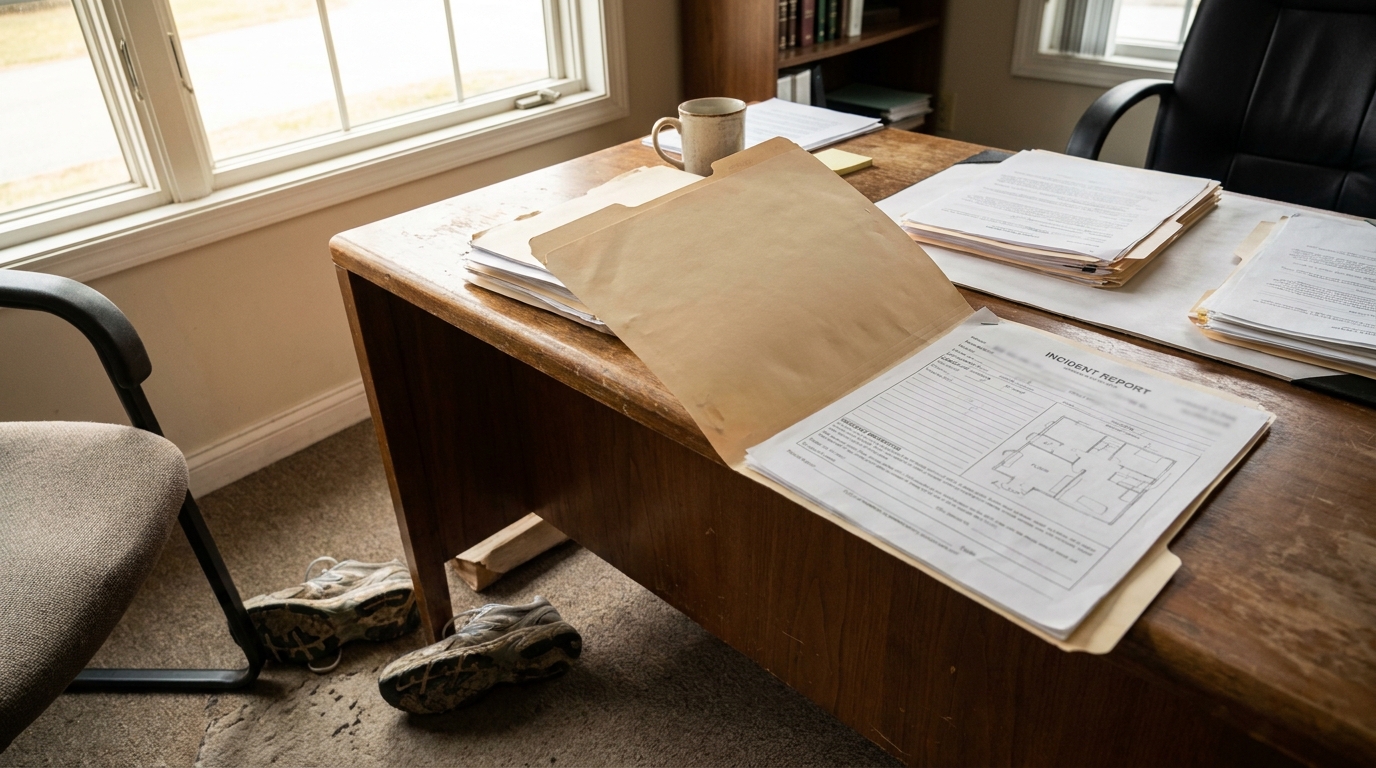
💡 Pro Tip: Request incident reports, maintenance logs, and surveillance footage immediately to establish how long a hazard existed.
How Florida's Comparative Fault Law Affects Your Settlement
Even if you were partially at fault for your slip and fall, you may still recover compensation, but the amount will be reduced or eliminated depending on your share of fault. Florida's comparative fault statute under Chapter 768 underwent a significant change in 2023 with HB 837. Under FL § 768.81(6), any party found to be greater than 50 percent at fault for their own harm may not recover any damages. If you are 50 percent or less at fault, your recovery is reduced proportionally.
Here is how that works in practice. If a jury determines your total damages are $100,000 but assigns you 30 percent of fault for not watching where you were walking, your recovery drops to $70,000. If you are found 51 percent at fault, you recover nothing.
| Claimant's Percentage of Fault | Effect on Recovery |
|---|---|
| 0% | Full damages awarded |
| 1%, 50% | Damages reduced by claimant's fault percentage |
| 51% or greater | No recovery permitted |
💡 Pro Tip: Insurance adjusters often try to shift blame early. Be cautious about giving recorded statements before speaking with a Fort Lauderdale personal injury attorney.
Types of Damages That Affect Slip and Fall Compensation in Florida
The damages you can claim play a major role in determining your Florida slip and fall case value. Economic damages in a negligence case generally include past and future lost income, medical expenses, lost support and services, and replacement value of lost personal property. These are the concrete, documentable losses that form the backbone of most settlements.
Non-Economic Damages
Beyond medical bills and lost wages, you may also pursue compensation for non-economic harm. This includes pain and suffering, emotional distress, loss of enjoyment of life, and similar impacts that do not come with a receipt. Non-economic damages are harder to quantify but can represent a substantial portion of the overall settlement in serious injury cases.
Special Considerations for Government Property Claims
Slip and fall claims against government entities in Florida follow different rules that can limit your recovery. These claims may involve sovereign immunity protections, shorter notice deadlines, and potential caps on damages for government property incidents. If you fell on city sidewalk, in a public building, or on county-maintained property, the timeline for action is often much shorter.
💡 Pro Tip: If your injury happened on government property, contact an attorney immediately. Missing a government claim deadline can permanently bar your compensation rights.
Why Acting Quickly Matters for Your Ft Lauderdale Slip and Fall Claim
Time is not on your side after a slip and fall injury. Florida imposes a two-year statute of limitations on most personal injury claims, shortened from four years by HB 837 in 2023. Once that window closes, you generally lose the right to file a lawsuit. Under FL § 95.051, only limited circumstances may pause or toll that deadline.
For Fort Lauderdale residents, early action also means stronger evidence. Surveillance footage gets overwritten, witnesses forget details, and maintenance records may disappear. The sooner you consult a premises liability lawyer in Fort Lauderdale, the better your chances of preserving necessary evidence.
Additionally, Florida's comparative fault statute under FL § 768.81(3) provides that in negligence actions, each defendant is generally liable only for their own percentage of fault. In multi-party slip and fall cases, your total recovery may be split among several responsible parties. An experienced Ft Lauderdale injury lawyer can identify all potentially liable parties to maximize your recovery.
💡 Pro Tip: Keep a detailed journal of your symptoms, medical appointments, and how your injury affects daily life. This personal record supports both economic and non-economic damage claims.
Frequently Asked Questions
1. What is the average slip and fall settlement amounts in Florida for serious injuries?
How much you may recover depends on the specific facts of your case.
Serious injuries like fractures, traumatic brain injuries, or spinal damage can result in settlements well into six figures. However, no attorney can guarantee a specific number. The amount depends on injury severity, clarity of the property owner's negligence, your percentage of fault, and whether the case settles or goes to trial.
2. Can I still get compensation if I was partly at fault for my slip and fall?
Yes, but your recovery may be reduced or eliminated depending on your share of fault.
Under FL § 768.81(6), you can recover damages as long as you are not more than 50 percent responsible for your injury. Your compensation is reduced by your assigned percentage of fault.
3. How long do I have to file a slip and fall claim in Fort Lauderdale?
Florida's statute of limitations sets a strict deadline for personal injury lawsuits.
Consult an attorney as soon as possible to confirm the applicable deadline for your specific situation. Certain circumstances under FL § 95.051 may toll the deadline, but courts interpret these exceptions narrowly.
4. What if I slipped and fell on government property in Broward County?
Claims against government entities involve additional procedural requirements.
You may need to file a notice of claim within a shorter timeframe than a standard personal injury case, and sovereign immunity protections may cap your potential recovery. These rules make it critical to speak with an attorney promptly if your injury occurred on public property.
5. What evidence do I need for a slip and fall claim in Florida?
Strong documentation is essential to proving negligence.
You should gather photographs of the hazard, medical records, incident reports, witness contact information, and any available surveillance footage. Under FL § 768.0755, proving the business had actual or constructive knowledge of the dangerous condition is a legal requirement.
Protect Your Rights After a Fort Lauderdale Slip and Fall
If you or a loved one has been injured in a slip and fall in Fort Lauderdale, Broward County, or South Florida, understanding the legal landscape is only the first step. Every case is different, and the factors discussed above, from comparative fault to the type of property where you fell, all shape what fair slip and fall compensation in Florida looks like for you. The most important thing you can do now is talk to an attorney who can evaluate your situation and give you honest guidance.
Contact Englander Peebles today. Call us at 954-226-9134 or reach out online for a free consultation. Our Fort Lauderdale personal injury attorneys are ready to fight for the compensation you deserve.