When a Crash Hurts More Than One Person in the Marriage
Key Takeaways: Loss of consortium is a Florida claim that may allow the uninjured spouse of someone seriously hurt in a Miami car accident to seek compensation in his or her own name for lost companionship, affection, intimacy, and household services. It is a non-economic damages claim, generally proven through credible testimony about how the marriage changed rather than bills or invoices. The claim is derivative, meaning it depends on the injured spouse's underlying negligence case and can fail or be reduced if that case fails or if comparative fault applies. Because Florida's no-fault system applies first, consortium generally becomes available only after the serious injury threshold under Fla. Stat. § 627.737 is met. Generally, only a spouse legally married at the time of the crash may file, while Florida case law separately recognizes a parent's claim for a significantly injured minor child, and a statute allows a dependent child to claim for a parent left permanently and totally disabled. For most crashes on or after March 24, 2023, a two-year negligence deadline typically governs, so acting early may help protect both the evidence and the claim.
A serious collision rarely injures just one person. When a spouse suffers a significant injury in a Miami car accident, the other spouse often absorbs real losses too: lost companionship, affection, intimacy, household help, and the daily partnership a marriage is built on. Florida law recognizes that harm through a claim called loss of consortium, which may allow the uninjured spouse to seek compensation in his or her own name, alongside the injured spouse's negligence case.
If your husband or wife was seriously hurt in a South Florida crash, the sooner you talk to a lawyer, the better your options generally are. The team at Englander Peebles helps injured people and their families across Broward and Miami-Dade County understand what damages may be available and how to document them. Call 954-226-9134 or contact us now to talk through your situation at no cost.
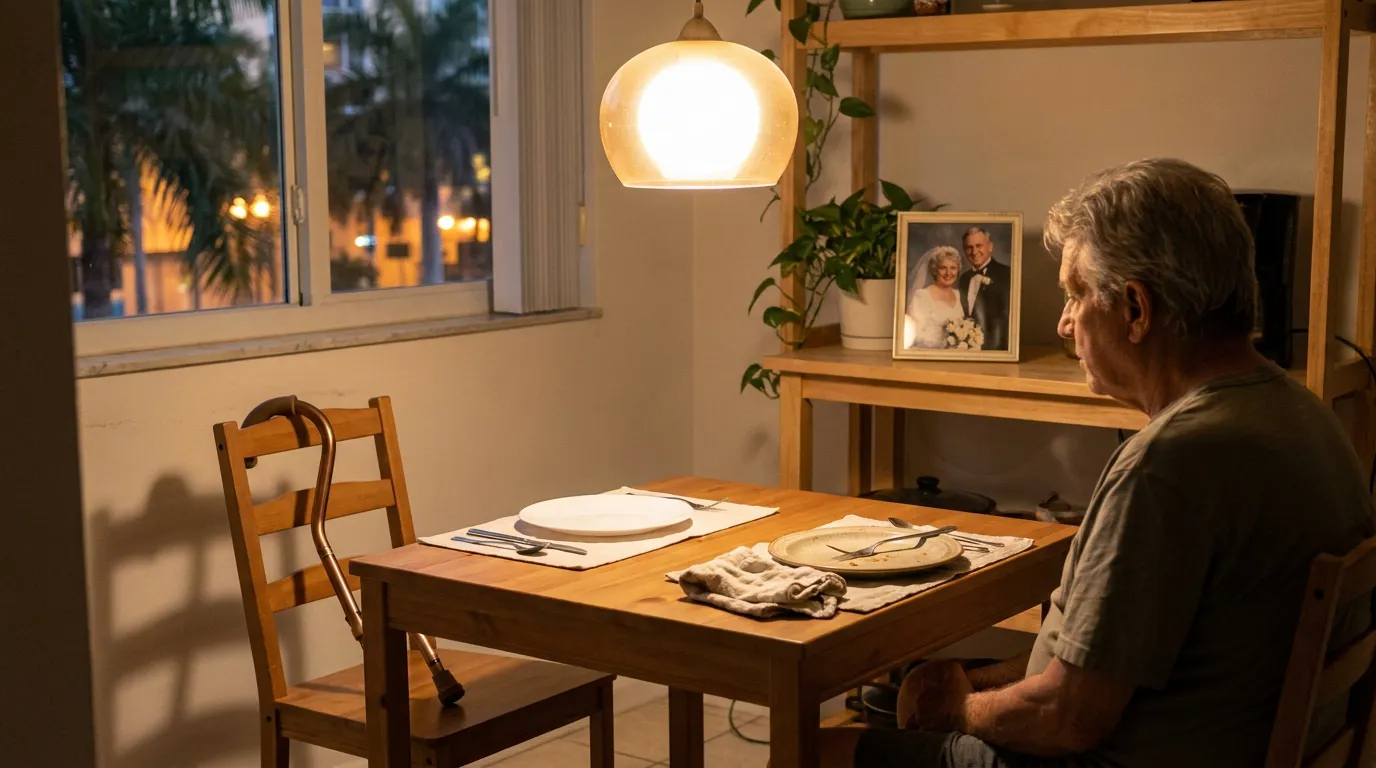
The Florida Consortium Definition in Plain English
Consortium refers to the intangible benefits a spouse receives from the marital relationship: companionship, society, affection, sexual relations, and household services. When another driver's negligence takes those benefits away, Florida may permit the uninjured spouse to pursue a separate claim for that relational harm.
This is not compensation for the injured person's pain, and it is not reimbursement for medical bills. Those generally belong to the injured spouse's own case. A consortium claim compensates the other spouse for what the marriage lost, which is why it's often called marital relationship damages rather than a medical claim.
Where the Right Comes From
Florida's modern rule traces back to a 1971 Florida Supreme Court decision recognizing a wife's cause of action for loss of consortium. In that Florida Supreme Court consortium ruling, the court receded from earlier precedent and held that a wife has a cause of action for loss of consortium arising from her husband's negligently caused injury, reasoning that changed social and legal conditions no longer justified giving that right to husbands alone. Today, either spouse may generally bring the claim.
That word "derivative" matters more than most people expect. Although the claim belongs personally to the uninjured spouse, it depends on the injured spouse's underlying negligence claim and generally cannot survive on its own. If the injured spouse's case fails on liability or causation, the consortium claim usually fails too, and defenses good against the injured spouse are generally good against the consortium claim as well, subject to the specific facts raised.
Why Loss of Consortium Car Accident Florida Claims Count as Non-Economic Damages
Florida tort law separates quantifiable financial losses from intangible harm. Under Fla. Stat. Chapter 768, "economic damages" include past and future lost income reduced to present value, medical and funeral expenses, lost support and services, replacement value of lost personal property, loss of appraised fair market value of real property, repair costs, and other objectively verifiable monetary losses. Consortium's relational elements generally don't fit that list, though the value of lost household services may have a measurable component in some cases.
Instead, consortium generally sits in the non-economic damages category, which covers harm that has no invoice attached to it. Proving these losses typically depends less on paperwork and more on credible testimony about how the marriage actually changed. Juries may consider how the couple lived before the crash and what daily life looks like now.
Practical proof in a companionship loss claim often includes:
- Testimony from both spouses about changes in intimacy, caregiving duties, and shared activities
- Statements from friends, family, clergy, or coworkers who observed the relationship before and after
- Medical records and physician testimony connecting the injury to lasting limitations
- Evidence of household tasks the injured spouse can no longer perform, and who took them over
- Photos, messages, calendars, or travel records showing the couple's prior routine
💡 Pro Tip: Keep a simple shared journal starting now. Short, dated entries about canceled plans, sleepless nights, and tasks you had to absorb tend to carry more weight than a reconstructed memory two years later.
How It Fits With the Rest of a Crash Case
A consortium claim is generally one line item within a larger recovery, not a standalone lawsuit. It's generally filed together with the injured spouse's case so both are heard by the same jury. For a broader overview, see our guide to damages you can seek in a car accident claim.
Florida's no-fault system also shapes when these claims may become available. PIP coverage generally applies first to medical expenses and a portion of lost wages, and a claimant generally must meet the serious injury threshold under Fla. Stat. § 627.737 before pursuing non-economic damages from the at-fault driver. Because consortium is non-economic, it typically becomes relevant in cases involving significant and permanent injury.
| Type of Claim | Who Brings It | What It Compensates |
|---|---|---|
| Personal injury (negligence) | The injured spouse | Medical bills, lost income, pain and suffering |
| Loss of consortium | The uninjured spouse | Companionship, affection, intimacy, household services |
| Filial consortium (Florida case law) | A parent | Loss of a significantly and permanently injured minor child's companionship and society |
| Dependent child's claim, Fla. Stat. § 768.0415 | An unmarried dependent child | Loss of services, comfort, companionship, and society when a parent is permanently and totally disabled |
| Wrongful death, Fla. Stat. § 768.21(2) | Surviving spouse | Loss of the decedent's companionship and protection, mental pain and suffering |
Who Can File, and Who Generally Cannot
Florida generally limits consortium claims more narrowly than many people assume. A person legally married to the injured party at the time of the crash may generally bring the claim. Florida case law separately recognizes a parent's claim for loss of filial consortium when a child suffers a significant injury resulting in permanent total disability, and Fla. Stat. § 768.0415 creates a statutory claim in the other direction: an unmarried dependent child may recover for permanent loss of services, comfort, companionship, and society when negligence causes a parent significant permanent injury resulting in permanent total disability.
Outside that narrow statutory situation, children have historically not been permitted to bring an independent claim for the loss of an injured parent's consortium. Commentary published in the Florida Bar Journal on parental consortium claims discusses this common-law rule and the debate surrounding it. Wrongful death cases follow a separate statutory scheme, so the answer can differ when a parent dies rather than survives with serious injuries.
When a Crash Is Fatal
If a spouse dies in a collision, the claim generally shifts from consortium to Florida's Wrongful Death Act. Under Fla. Stat. § 768.21(2), a surviving spouse may seek recovery for loss of the decedent's companionship and protection and for mental pain and suffering from the date of injury. The personal representative of the estate generally files that action on behalf of the survivors, and wrongful death actions carry their own limitations period.
Fault Sharing Can Reduce What a Spouse Recovers
Because the claim is derivative, fault findings in the injured spouse's case generally flow through to the consortium award. Comparative negligence is the doctrine courts use to calculate a plaintiff's compensatory damages relative to their share of fault in causing the injury. Jurisdictions apply it differently, with pure systems reducing damages by any percentage of fault and modified systems barring recovery once a plaintiff crosses a 50% or 51% threshold, as explained in this overview of comparative negligence rules. Florida moved from a pure system to a modified system in 2023: under the current version of Fla. Stat. § 768.81, a plaintiff found more than 50% at fault generally may not recover damages in most negligence actions, while claims arising before the March 24, 2023 effective date are generally still governed by the pure comparative fault rule.
Multiple-defendant crashes add another layer. Florida largely abolished joint and several liability for negligence actions in 2006 under Fla. Stat. § 768.81, moving toward apportionment of damages by each defendant's percentage of fault, with limited exceptions that courts apply narrowly. In a multi-vehicle or rideshare collision, recovery may be spread across several policies rather than collected from one deep-pocket defendant.
The Two-Year Clock Applies Here Too
A loss of consortium car accident Florida claim is generally governed by the same limitations period as the underlying negligence case. For negligence causes of action accruing on or after March 24, 2023, Florida's limitations statute generally provides a two-year window; claims that accrued before that date generally remain subject to the prior four-year period. Because consortium is derivative, the spouse's filing deadline typically runs on that same clock rather than a separate one.
Exceptions exist, but courts generally interpret them narrowly. Tolling and delayed discovery may apply in limited circumstances, and claims involving governmental entities generally follow separate pre-suit notice requirements distinct from the civil limitations period. Never assume an extension applies to your facts; confirm it with counsel early.
💡 Pro Tip: If you are unsure whether your spouse's injury is permanent, file early anyway. Consortium damages can often be developed as the medical picture clarifies, but a missed deadline generally cannot be fixed.
Working With a Miami Injury Lawyer on a Consortium Claim
These claims are personal, and they require a lawyer who will handle them with care. Defense counsel may seek discovery into the marriage, including medical and counseling records, which is one reason many spouses want guidance before answering questions or giving a recorded statement. Bringing a consortium claim may also place otherwise private information at issue, so an experienced loss of consortium car accident Florida lawyer can explain what may be discoverable and what may be protected.
Early legal help may also help protect the underlying case, which the consortium claim depends on. Crash scene photos, surveillance footage from Miami-Dade businesses, and witness memories fade quickly. Accident victims in Broward County and Miami-Dade often tell us they waited because they assumed the insurer would be fair, and outcomes always depend on the specific facts of each case.
Frequently Asked Questions
1. Can I file a consortium claim if we were not legally married at the time of the crash?
Generally, Florida requires a valid marriage that existed at the time of the injury. Engaged partners and unmarried cohabitating couples typically cannot bring the claim, though fact-specific circumstances should be reviewed with an attorney.
2. Does a consortium claim mean I have to testify about our private life?
In many cases, yes. Testimony about intimacy, caregiving, and shared responsibilities is often central to proving the loss, and your attorney can seek protective orders or other limits on discovery where appropriate.
3. Is loss of consortium covered by PIP?
Generally, no. PIP generally covers a portion of the injured person's medical expenses and lost wages. Consortium is a non-economic claim pursued against the at-fault party, generally after the serious injury threshold is met.
4. What if my spouse was partly at fault for the accident?
Comparative fault findings generally reduce the consortium recovery in the same proportion as the injured spouse's award, because the claim derives from that case. Under current Florida law, fault greater than 50% may bar recovery altogether in most negligence cases.
5. Can our children recover for what the crash did to our family?
Florida has generally not recognized a broad independent claim by a child for an injured parent's lost consortium, but Fla. Stat. § 768.0415 allows an unmarried dependent child to recover when negligence leaves a parent permanently and totally disabled, and Florida case law allows a parent to claim for a significantly injured minor child.
Protecting Your Family's Full Recovery
Loss of consortium recognizes something injured families already know: a serious crash reshapes a marriage. Florida may allow the uninjured spouse to seek compensation for lost companionship, affection, and household partnership, but the claim is generally derivative, falls under non-economic damages, can be reduced or barred by comparative fault, and is typically tied to a two-year deadline for recent crashes. Every case turns on its own facts, and a careful review of the medical evidence and the marriage's before-and-after picture matters enormously.
You do not have to figure this out alone. The attorneys at Englander Peebles serve injured people throughout Fort Lauderdale, Miami, and the tri-county area. Call 954-226-9134 or request your free case review today. Reach out to our Fort Lauderdale personal injury attorneys.
Disclaimer: This content is for informational purposes only and is not legal advice. Every case is unique, and results may vary. Consult an attorney about your specific circumstances.