Why a Hospital Can Claim Part of Your Crash Settlement in Broward County
Key Takeaways: A hospital lien is a legal claim a medical facility may assert against your car accident settlement to be paid directly for emergency care. Florida has no statewide hospital lien statute, so in Fort Lauderdale the rules generally come from a Broward County ordinance requiring a verified claim filed with the clerk of the Circuit Court before or within ten days after discharge. Liens work differently from PIP, since Florida's no-fault law bars insurers from asserting a lien on a tort recovery for PIP benefits paid, while Medicaid and state-funded programs may assert their own subrogation or lien rights. Lien amounts are often negotiable, and common challenges involve procedural defects, charges above reasonable value, or health coverage that was never billed. Deadlines also matter, since most general negligence claims accruing on or after March 24, 2023 fall under a two-year limitations period instead of the former four years. Reviewing the clerk's records early and keeping every bill and lien notice organized can meaningfully affect what you may actually take home.
A hospital lien is a legal claim a medical facility may file against money you recover from the at-fault driver, allowing the hospital to be paid directly out of your settlement for emergency care. In Broward County, this lien generally arises from a local ordinance rather than a statewide statute, meaning rules at a Fort Lauderdale hospital may differ from those in Miami-Dade or Palm Beach County. If you were treated at a local trauma center, understanding this process early can meaningfully affect what lands in your pocket.
If a hospital has sent you a lien notice or you're worried about deductions from your recovery, the team at Englander Peebles is ready to review your situation. Call 954-226-9134 or contact us now to talk through your options with a Fort Lauderdale attorney. Call us today for a free consultation.
What Is a Hospital Lien and How Does It Work?
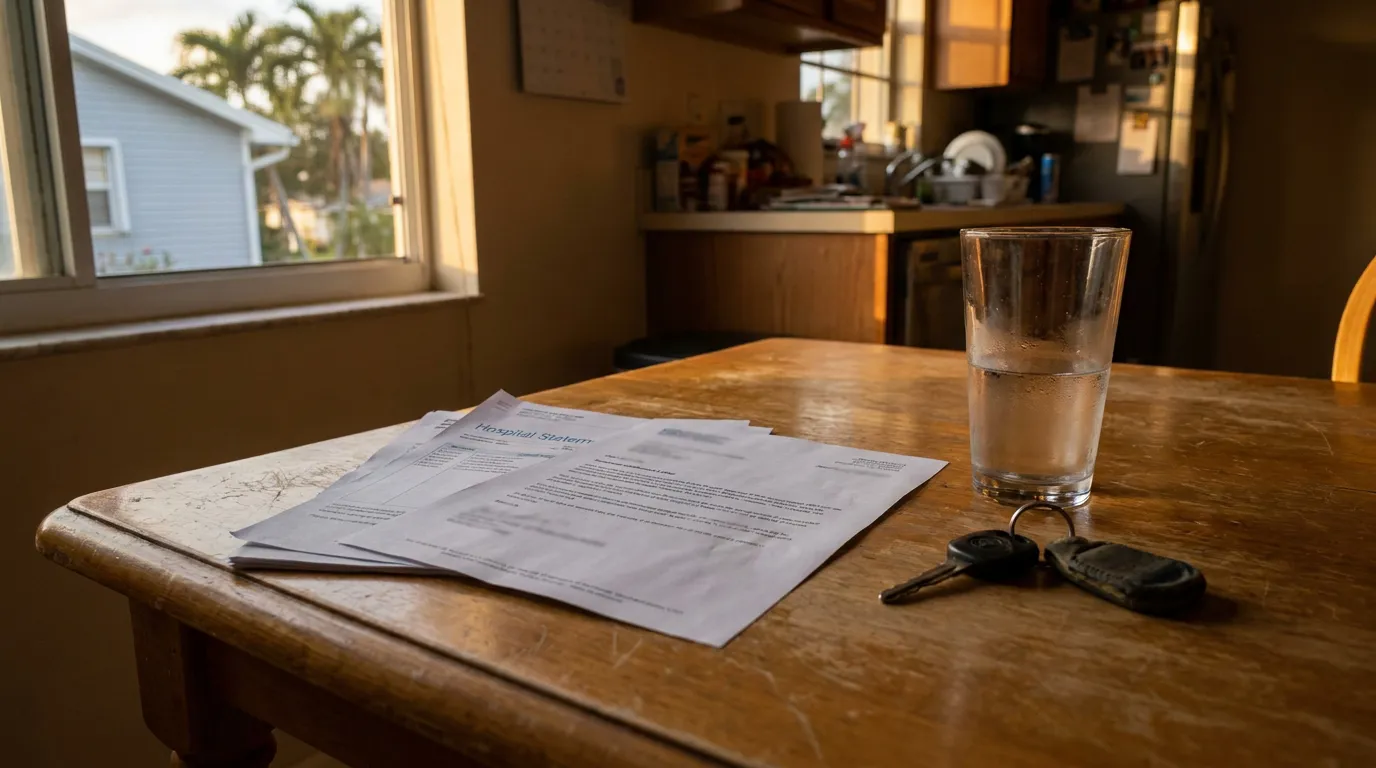
A hospital lien is generally a security interest in your injury claim, not a bill sent to your mailbox. When a hospital treats you after a crash and isn't paid in full, it may assert a right to be reimbursed from any settlement or judgment you later obtain from the at-fault driver. If validly created and perfected, the lien may attach to your claim's proceeds, meaning your attorney generally must account for it before releasing funds to you.
This concept appears in several places under Florida law. When a state-funded program (such as Medicaid) covers accident-related care and pays, it holds a lien for that amount on causes of action accruing to the recipient from the injury. Under Florida law, that lien attaches and is perfected automatically at the time the recipient first receives treatment -- no court filing is required to perfect it. The agency may (but is not required to) file a verified claim of lien with the clerk of the circuit court in the recipient's last known county of residence or in any county deemed appropriate by the agency. This same structure, treatment now, repayment from recovery later, drives most medical lien Fort Lauderdale disputes we see.
Not every unpaid medical bill becomes a lien. A provider generally must follow specific statutory or ordinance-based steps to create an enforceable claim. Bills that don't meet those requirements may still be owed as ordinary debt, but typically don't carry the same priority against your recovery.
Why Florida Has No Single Statewide Hospital Lien Law
Florida is unusual because it has no comprehensive statewide hospital lien statute. Instead, hospital lien rights in some counties arise from local ordinances adopted under home rule authority. In 2012, the Florida Supreme Court held that a special law creating hospital liens was unconstitutional because the Florida Constitution prohibits special laws creating liens, leaving validly enacted county ordinances as the operative mechanism where they exist.
That history explains why a hospital lien Florida question rarely has one answer. A patient treated in Broward County may face a perfected lien, while a patient with identical facts treated elsewhere may not. Because the validity and scope of these local provisions can be litigated, determining which county's rules apply is often the first step in evaluating potential settlement deductions.
How a Broward Hospital Lien Is Perfected
Broward County's ordinance sets out precise filing steps a hospital is generally required to follow. Under the county code, the hospital's executive officer or agent, before or within ten days after discharge, must file with the clerk of the Circuit Court of Broward County a verified claim setting out the patient's name, the hospital's information, admission and discharge dates, and the amount claimed due. Failing to follow the Broward hospital lien ordinance requirements can affect whether the claim is enforceable against your settlement.
What the Filing Typically Includes
- The injured patient's name and address
- The name and location of the treating hospital
- Dates of admission and discharge
- The amount claimed as due for care provided
- Known parties who may be liable for the injury
Timing matters more than most people expect. Because the filing window ties to your discharge date, a lien may already be on record before you speak with a lawyer. Requesting a search of the clerk's records early can clarify what may be deducted later.
💡 Pro Tip: Ask the hospital's billing department, in writing, whether your health insurance was billed. Providers sometimes bypass available coverage in favor of a lien, and correcting that can change your net recovery.
Hospital Liens Versus PIP Reimbursement in a Florida Crash Case
Florida's no-fault system means your own PIP coverage generally pays first, and it works very differently from a hospital lien. Under Florida's motor vehicle insurance law, an insurer paying PIP benefits has no lien on any tort recovery, whether by judgment, settlement, or otherwise. The same law provides that an injured party has no right to recover damages in tort for which PIP benefits are paid or payable, which is why PIP amounts are typically excluded from the claim rather than repaid out of it. See the Florida motor vehicle insurance statutes for full text.
In practice, a hospital bill after crash Florida coverage runs out is handled differently than PIP. PIP benefits are capped and often exhausted quickly by an ER visit, imaging, and a short admission. Whatever the hospital can't collect from PIP frequently drives the lien claim.
| Type of Claim | Who Asserts It | Where It Attaches |
|---|---|---|
| Broward hospital lien | Treating hospital | Your third-party recovery, once filed with the clerk |
| PIP benefits | Your auto insurer | No lien permitted on tort recovery |
| Medicaid | State agency | Third-party benefits, by subrogation and assignment |
| State-funded program lien | Program administrator | Causes of action, perfected automatically at time of first treatment |
Medicaid, Subrogation, and Other Claims Against Your Recovery
A hospital is not the only party that may reach into a settlement. Florida law gives the state Medicaid agency an automatic right of subrogation to third-party benefits. Under Fla. Stat. § 409.910(6)(a), the agency is subrogated to a Medicaid recipient's rights to any third-party benefit for the full amount of medical assistance provided. Section 409.910(6)(b) further addresses automatic assignment of the recipient's recovery rights upon acceptance of medical assistance.
Those rights aren't unlimited. Fla. Stat. § 409.910 sets forth formulas and an administrative process allowing a recipient to contest the presumptive allocation attributed to past medical expenses. Federal law limits Medicaid recovery to the medical-expense portion of a settlement, and the U.S. Supreme Court held in 2022 that Florida may also reach amounts allocated to future medical expenses, so the outcome depends on the facts and evidence about allocation.
Underinsured Motorist Notice Before You Settle
If the at-fault driver's policy won't cover your losses, consider addressing your UM coverage before signing a release. Florida law requires written notice of a proposed settlement be sent by certified or registered mail to all underinsured motorist insurers providing coverage. That insurer then generally has 30 days after receipt to authorize the settlement or preserve its subrogation rights by paying the injured party the tentative settlement amount. Skipping this step can jeopardize a claim that may be worth more than the liability policy.
Reducing a Hospital Lien Car Accident Settlement Florida Victims Face
Lien amounts are often negotiable, and disputes generally follow a defined path under Florida practice. When the validity or amount of a claim is contested, attorneys have ethical obligations regarding disputed settlement funds under the Rules of Professional Conduct, which may include holding the disputed portion in trust until resolved rather than distributing it to either side. This safeguard protects you while the numbers are sorted out.
Common grounds for challenging or reducing a lien may include procedural defects in the filing, charges above reasonable value, and available health coverage that was never billed. None of these arguments succeed automatically; results depend heavily on your file's documentation and the governing ordinance or statute's terms. An experienced hospital lien car accident settlement Florida lawyer can evaluate whether a reduction is realistic in your case.
Some patients arrange treatment through a letter of protection rather than paying up front. That arrangement is a contractual promise to pay from the recovery rather than a statutory lien; understanding what is a letter of protection helps you compare it to a hospital lien. Both may reduce your net recovery, but they arise from different legal sources.
💡 Pro Tip: Keep every itemized bill, explanation of benefits, and lien notice in one folder. Line-by-line records often make a reduction argument persuasive.
Deadlines That Shape Your Fort Lauderdale Claim
Lien issues generally cannot be separated from the deadline to bring your underlying case. Historically, Fla. Stat. § 95.11(3)(a) required negligence actions to be commenced within four years. For causes of action accruing on or after March 24, 2023, the general negligence limitations period was reduced to two years, so the applicable deadline depends on your accident date and claim type and should be confirmed with counsel. Other claims, such as medical malpractice and wrongful death, are governed by separate limitations provisions.
Exceptions exist, but Florida courts generally interpret tolling and delayed discovery doctrines narrowly. They don't apply automatically, and relying on one without careful review is risky. Reading current Florida statute of limitations provisions is a starting point, not a substitute for legal advice about your specific timeline.
Frequently Asked Questions
1. Can a hospital file a lien if I have health insurance?
In many cases, yes, though whether the lien holds up can depend on the provider's billing conduct, the governing ordinance, and your coverage terms. Asking whether your insurer was billed is a reasonable first step.
2. Does a Broward hospital lien apply to my pain and suffering damages?
Ordinances and courts may treat damage categories differently, and allocation disputes are fact-dependent. Settlement allocation is frequently a negotiated issue.
3. What happens if the hospital misses the filing window?
A claim that doesn't meet the ordinance's requirements may be unenforceable as a lien, though the underlying debt can still be pursued by other means. A records search at the clerk's office generally reveals the filing date.
4. Will PIP cover my entire emergency room bill?
Often not. PIP benefits are limited, and a serious admission can exhaust them quickly, potentially leaving a balance the hospital may pursue.
5. Should I settle before resolving the lien?
Settling first can leave you exposed if the lien exceeds what you expected. Addressing liens during negotiation is generally the safer sequence.
Protecting What You Actually Take Home
A hospital lien can quietly consume a large share of a settlement if no one challenges it. Because Florida relies on county ordinances rather than one statewide law, Fort Lauderdale residents may benefit from knowing how the Broward filing requirements work, how PIP interacts with third-party recovery, and which government programs may assert their own claims. Every case turns on its own facts, so a review of your records is generally the most reliable way to understand what your recovery may look like.
Do not guess at what a lien means for your case. Reach out to our Fort Lauderdale personal injury attorneys at Englander Peebles by calling 954-226-9134 or request your free case review today.
Disclaimer: This content is for informational purposes only and is not legal advice. Every case is unique, and results may vary. Consult an attorney about your specific circumstances.