When a Truck Crash Leaves You With More Damage Than Insurance Covers
Key Takeaways: After a serious truck crash in Florida, victims may pursue damages beyond policy limits through statutory bad faith claims, underinsured motorist coverage, and higher insurance requirements for hazmat carriers. While uncommon, settlements exceeding limits occur in catastrophic commercial truck cases. Multiple liable parties and elevated minimum coverage for heavy trucks can expand recovery. Government entity claims face strict caps and special procedures. Each path requires specific notice requirements and adherence to Florida's two-year negligence deadline. Acting quickly to preserve evidence is essential for full compensation.
A serious truck crash can leave you with medical bills, lost income, and long-term care needs that dwarf the at-fault driver's insurance coverage. Florida law provides several paths to pursue compensation beyond policy limits through bad faith claims, underinsured motorist coverage, hazmat carrier requirements, and claims against multiple liable parties. The path is fact-specific and never automatic.
If you or a loved one was hurt in a commercial truck collision, the team at Englander Peebles is ready to help. Call our Fort Lauderdale personal injury attorneys at 954-226-9134 or reach out through our online consultation request to discuss your situation. Early action protects evidence that proves your claim's true value.
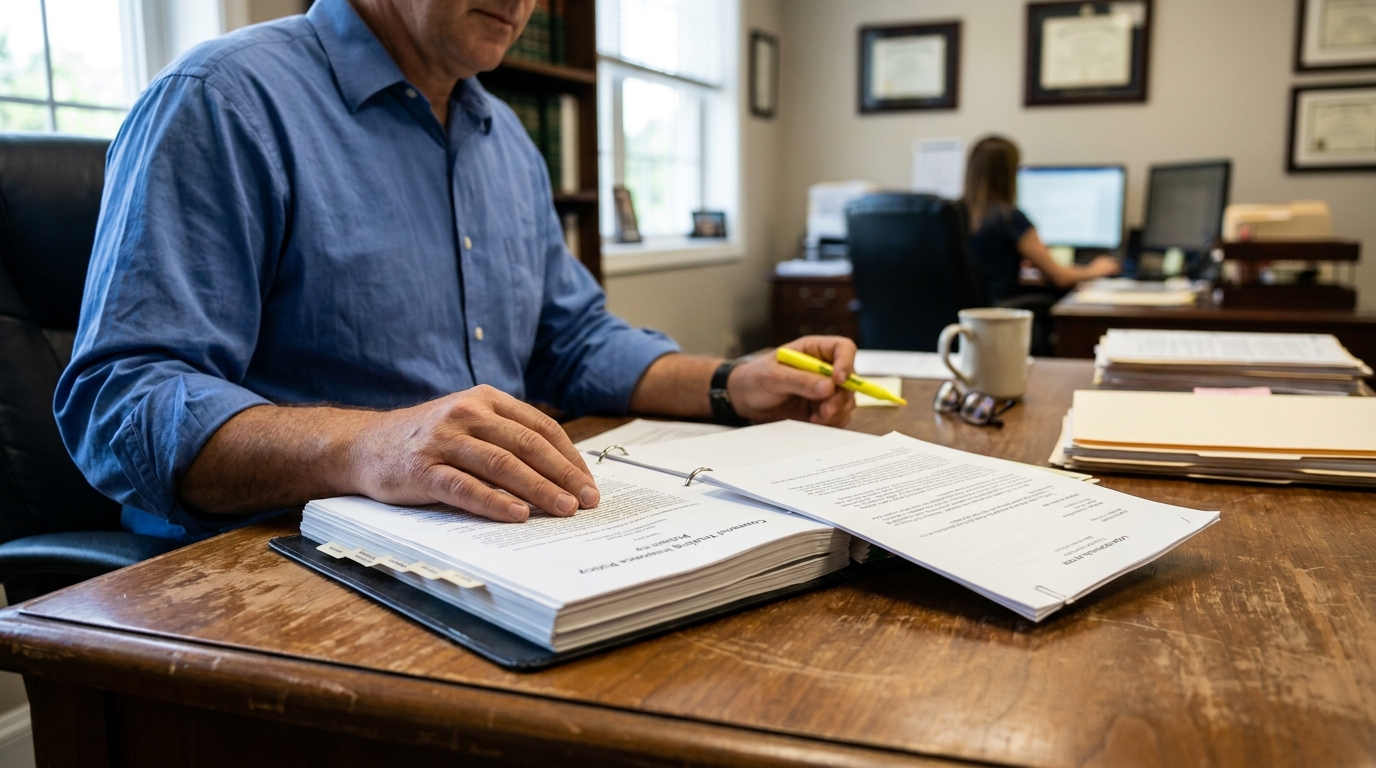
How Often Do Auto Accident Settlements Exceed the Policy Limits?
Settlements exceeding insurance limits are uncommon but occur in serious truck cases under specific conditions. The outcome depends on injury severity, insurer conduct, and available coverage sources. In catastrophic commercial truck wrecks where damages reach millions, available policies may simply be insufficient.
Florida sets minimum liability coverage for commercial trucks based on weight and cargo. Under FL § 627.7415, commercial vehicles with a gross vehicle weight of 44,000 pounds or more must carry $300,000 minimum combined bodily injury and property damage liability. Trucks under U.S. DOT regulations per 49 C.F.R. part 387 require federally mandated minimums ranging from $750,000 to $5,000,000 for certain cargo. Even these amounts can fall short of covering life-altering injuries.
💡 Pro Tip: Ask your attorney to identify every insurance policy early. A single truck crash may involve the driver's policy, motor carrier's policy, trailer owner's policy, and your own UM/UIM coverage.
Bad Faith Claims: A Path to Damages Beyond Insurance Limits
A statutory bad faith claim against the insurer is one of the most powerful tools for recovering damages beyond limits. Under Section 624.155(1), any person may bring civil action against an insurer when damaged by the insurer not attempting in good faith to settle claims when, under all circumstances, it could and should have done so.
Bad faith matters because of recoverable damages scope. Section 624.155 provides that damages shall include those reasonably foreseeable as a result of the violation, which can include amounts above original policy limits. Read the full text in Chapter 624 of the Florida Statutes. This is why an insurer's claim handling deserves close attention from the start.
Before a bad faith lawsuit proceeds, specific notice is required. Under Section 624.155(3)(a), as a condition precedent, the department and authorized insurer must receive 60 days' written notice of the violation. This Civil Remedy Notice gives the insurer opportunity to cure. Additionally, a bad faith action generally shall not lie if the insurer tenders the lesser of policy limits or the amount demanded within 90 days after receiving actual notice with sufficient supporting evidence.
In limited circumstances, punitive damages may be available. Section 624.155 provides that punitive damages may not be awarded unless the acts giving rise to the violation occur with such frequency as to indicate a general business practice and those acts are willful, wanton, and malicious; or are in reckless disregard for the rights of any insured or of a beneficiary under a life insurance contract. Note that the punitive damages language appears in a different subsection in current versions of the statute, as subsection numbering has shifted through legislative amendments; subsection (8) addresses non‑preemption of other remedies and related limitations. Courts apply these standards narrowly.
💡 Pro Tip: Keep copies of every communication with the insurance company. A documented timeline becomes central evidence if the insurer delays or lowballs a clearly supported claim.
Underinsured Motorist Coverage and Hazmat Carriers
When the at-fault trucker's policy runs out, your own underinsured motorist coverage may close the gap. This protection applies only if you purchased UM/UIM coverage, which Florida insurers must offer but drivers aren't required to buy. Under FL § 627.727(6)(a), if an injured person settles with a liability insurer and the settlement wouldn't fully satisfy the claim, written notice of the proposed settlement must be submitted by certified or registered mail to all underinsured motorist insurers providing coverage.
Hazmat cargo dramatically raises available coverage. Under FL § 324.021(9)(c)2, standard limits don't apply if the vehicle transports hazardous materials unless the operator has insurance with limits of at least $5,000,000 combined property damage and bodily injury liability. Review financial responsibility rules in Chapter 324 of the Florida Statutes. A Fort Lauderdale truck accident attorney should investigate cargo type early.
Insurance contract provisions protect victims when trucking companies face financial trouble. FL § 324.151(1)(c) requires policies contain provisions that satisfaction of judgment by an insured isn't a condition precedent to the carrier's payment duty, and that bankruptcy or insolvency doesn't relieve the carrier of policy obligations.
| Coverage Source | Typical Trigger | Florida Authority |
|---|---|---|
| Heavy commercial truck minimum | GVW of 44,000 lbs or more | FL § 627.7415(3) |
| Hazmat cargo carrier | Placarded hazardous materials | FL § 324.021(9)(c)2 |
| Bad faith damages | Insurer fails to settle in good faith | FL § 624.155 |
| UIM coverage | At-fault policy is insufficient | FL § 627.727(6)(a) |
When a Government Truck Is Involved
Claims against government entities follow different rules with strict caps. Under F.S. 768.28(5), neither the state nor its agencies shall be liable to pay a claim by any one person exceeding $200,000, or any claim or judgment arising out of the same incident or occurrence exceeding $300,000. These caps apply to all tort claims against the state and its agencies and subdivisions, not solely to claims involving government-operated vehicles.
Recovery beyond those caps requires a separate process. F.S. 768.28(5) provides that judgment portions exceeding these amounts may be reported to the Legislature but may be paid only by further legislative act. This "claims bill" process is distinct from civil lawsuits and isn't guaranteed. Government employees generally cannot be held personally liable unless they acted in bad faith, with malicious purpose, or exhibiting wanton and willful disregard of human rights, safety, or property.
💡 Pro Tip: Claims against government entities involve unique notice requirements and shorter timelines. If a public agency truck was involved, contact a lawyer immediately.
Acting Quickly Protects Your Right to Full Recovery
Time matters in every Florida truck accident claim. Under Section 95.11(5)(a), negligence actions fall within a two-year limitation period. This applies to claims accruing on or after 2023 tort reform; courts interpret tolling and discovery exceptions narrowly. Waiting can mean losing the right to sue.
Early investigation strengthens your ability to pursue deserved damages. Trucking companies and insurers move fast to gather evidence. A skilled Fort Lauderdale truck accident attorney can preserve driver logs, maintenance records, and electronic data before they disappear. Building that record early separates policy-limits offers from full-value recovery.
Many readers also want to understand the broader pattern of large settlements. Our related discussion on car accident settlements that surpass coverage in Florida explains how these situations develop. Florida's comparative negligence rules can reduce recovery if you are found partly at fault.
Frequently Asked Questions
How often do auto accident settlements exceed the policy limits in Florida?
There is no fixed statistic. In serious truck cases, recoveries above limits generally arise through bad faith claims, UIM coverage, or multiple liable parties, depending on specific facts.
What is a Civil Remedy Notice?
It is required filing before statutory bad faith lawsuits. Section 624.155(3)(a) requires 60 days' written notice to the insurer and opportunity to cure before suit.
Can I recover under both common law and statutory bad faith?
No. Section 624.155(11) provides that any person may obtain judgment under either common-law or statutory remedy, but not both.
What if a hazmat truck caused my injuries?
Available insurance is generally much higher. Operators transporting placarded hazardous materials may be required to carry at least $5,000,000 in combined liability coverage.
How long do I have to file a truck accident claim?
Florida's negligence statute of limitations is generally two years, subject to limited exceptions courts read narrowly. Consult a lawyer promptly.
Putting It All Together After a Serious Truck Crash
Recovering damages beyond insurance limits after a truck crash is possible but depends on case facts and available legal tools. Bad faith claims, underinsured motorist coverage, hazmat carrier requirements, and claims against multiple parties can each open doors to compensation exceeding initial offers. None of these paths is automatic, and each carries conditions, deadlines, and risks. The insurer's initial number is rarely the final word.
If your losses surpass the at-fault driver's policy, don't wait. Contact Englander Peebles by calling 954-226-9134 or sending us a message through our free case review form. Call us today for a free consultation and let our Fort Lauderdale team fight for the full compensation you deserve.