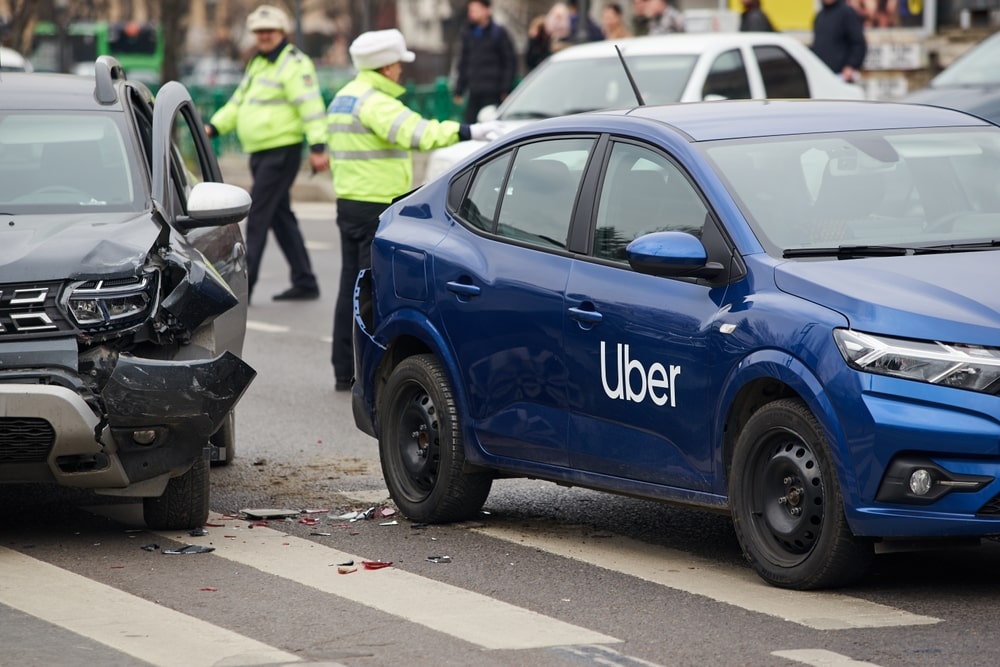
The answer is rarely simple. Rideshare accidents sit at the intersection of insurance law, employment classification, and Florida's law, and the company whose app was running at the time of the crash is often the last party willing to admit responsibility.
Rideshare Accidents Are Different from Ordinary Car Accidents
Uber and Lyft classify their drivers as independent contractors, not employees. This matters in a personal injury case. Under the legal doctrine of respondeat superior, an employer is typically responsible for the negligent acts of an employee committed within the scope of employment. Because rideshare drivers are independent contractors, that doctrine generally does not apply the same way.
Instead of direct employer liability, Florida law fills the gap with a mandatory insurance framework, and injured parties typically pursue compensation through layered insurance policies rather than a direct negligence claim against the rideshare company itself.
Florida's Layered Insurance System
Under Florida Statute § 627.748, the insurance that applies to a rideshare crash depends on what the driver's app was doing at the moment of impact:
- App completely off: Only the driver's personal auto policy applies — the rideshare company has no insurance obligation.
- App on, waiting for a ride request: Contingent coverage of $50,000 per person / $100,000 per incident for wrongful death or bodily injury and $25,000 for property damage.
- En route to a pickup or with a passenger in the vehicle: At least $1 million in coverage for death, bodily injury, and property damage.
When Fault Is Shared
Rideshare crashes may involve more than one negligent party — the rideshare driver, another motorist, or even a pedestrian. Insurers for rideshare companies are well aware of this rule, and it is common for them to argue that a passenger, pedestrian, or the other driver bears a share of fault. Where multiple defendants are involved, Florida courts can also assign fault to non-parties, which makes a thorough, independent investigation of the crash essential.
Who Can Actually Be Held Responsible
Depending on the facts, liability in a rideshare crash may fall on:
- The rideshare driver, for causing your injury;
- A third-party driver who caused or contributed to the crash;
- The rideshare company itself, in narrow circumstances;
- The owner of a vehicle involved, if different from the driver.
- A government entity, where a road defect or signal malfunction contributed to the crash.
What to Do After a Rideshare Crash
- Seek medical attention, even if injuries seem minor — some symptoms may appear hours or days later;
- Screenshot the trip details in the app (driver’s name, license plate, trip status, and timestamp) before it becomes harder to retrieve.
- Get the names, contact information, and insurance details of every driver involved, not just the rideshare driver;
- Get the names and contact information of any witnesses;
- Photograph the vehicles, the scene, and any visible injuries;
- Report the crash through the app, but avoid giving a recorded statement to any insurer before speaking with an attorney.
Talk to a Florida Uber and Lyft Accident Lawyer Today
If you or a loved one has been hurt due to an Uber or Lyft driver, the attorneys at Englander Peebles are ready to review your case at no cost. We handle these claims on a contingency-fee basis, so you pay nothing unless we recover for you.