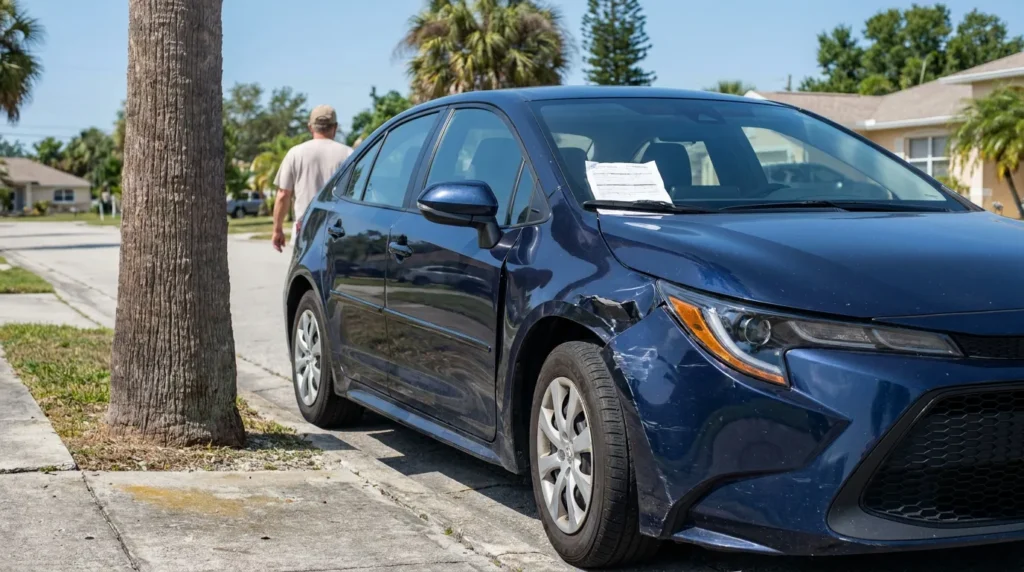
Florida follows the dangerous instrumentality doctrine where the owner of a vehicle can be held liable for a crash caused by someone else who was driving it with permission — even if the owner was nowhere near the scene.
For injury victims, this matters enormously: it often means there is a second source of insurance and financial responsibility beyond the driver's own policy.
What the Doctrine Actually Says
Florida courts treat motor vehicles as inherently dangerous instruments. Because an owner controls who gets to drive their vehicle, the law places responsibility on that owner for crashes caused by permitted drivers, regardless of whether the owner did anything wrong. Once permission to use the vehicle is established, liability attaches automatically — the injured party does not need to prove the owner was personally negligent.
How Permission Is Established
Permission can be express (the owner directly authorized the use) or implied through a regular pattern of use — a family member who is routinely allowed to drive the car, for example.
Statutory Damage Caps for Private Owners of Vehicles
If the owner of the vehicle involved in a collision is a person, Florida law caps the owner’s liability under the doctrine (Fla. Stat. § 324.021(9)(b)(2)) to:
- $100,000 per person for bodily injury;
- $300,000 per incident when more than one person is injured;
- $50,000 for property damage; and
- Up to an additional $500,000 in economic damages if the driver lacked adequate liability insurance.
Some Exceptions to the Doctrine
- Stolen vehicles: an owner isn't liable if the vehicle was being driven without permission after a theft.
- Rental and leasing companies: the federal Graves Amendment (49 U.S.C. § 30106) preempts the doctrine for rental and leasing companies — they are liable only if their own negligence is proven.
Negligent Entrustment: A Separate, Uncapped Theory
Distinct from the dangerous instrumentality doctrine, negligent entrustment holds an owner liable for their own decision to lend a vehicle to someone the owner knew or should have known was unsafe to drive — someone with a suspended license, a history of DUIs, or who was visibly impaired at the time. Unlike the dangerous instrumentality doctrine, the statutory damage caps described above do not apply to negligent entrustment claims.
Why This Matters for Injury Victims
Family vehicles, employer-owned cars, and borrowed vehicles are involved in South Florida crashes every day. When the at-fault driver's own insurance is minimal or nonexistent, identifying the vehicle's owner — and whether the dangerous instrumentality doctrine or negligent entrustment applies — can make the difference between an inadequate settlement and full compensation.
Talk to a South Florida Injury Lawyer Today
If you or a loved one has been hurt because of someone lent their vehicle to another who caused a collision, the attorneys at Englander Peebles are ready to review your case at no cost. You pay nothing unless we make a recovery for you.
Englander Peebles | (954) 500-HURT | ftlinjurylaw.com | 2122 W. Cypress Creek Road, Suite 206, Fort Lauderdale, FL 33309