When a $10,000 Policy Meets an 80,000-Pound Truck
Key Takeaways: Florida's mandatory $10,000 PIP coverage quickly depletes in catastrophic truck injuries, paying only 80% of medical costs and 60% of lost wages from the same limited pool. Commercial trucks carry far higher liability coverage, $50,000 to $300,000 or more based on weight, making settlements regularly exceed PIP minimums. Victims can access additional coverage through Florida's dangerous-instrumentality doctrine and by identifying multiple responsible parties including drivers, carriers, owners, lessors, and maintenance providers. Florida's comparative fault rules mean each defendant pays only its own share, making it essential to pursue every liable party. Fatal crashes receive just $5,000 in PIP death benefits, requiring wrongful death claims. With a two-year negligence deadline, prompt investigation and legal guidance are critical.
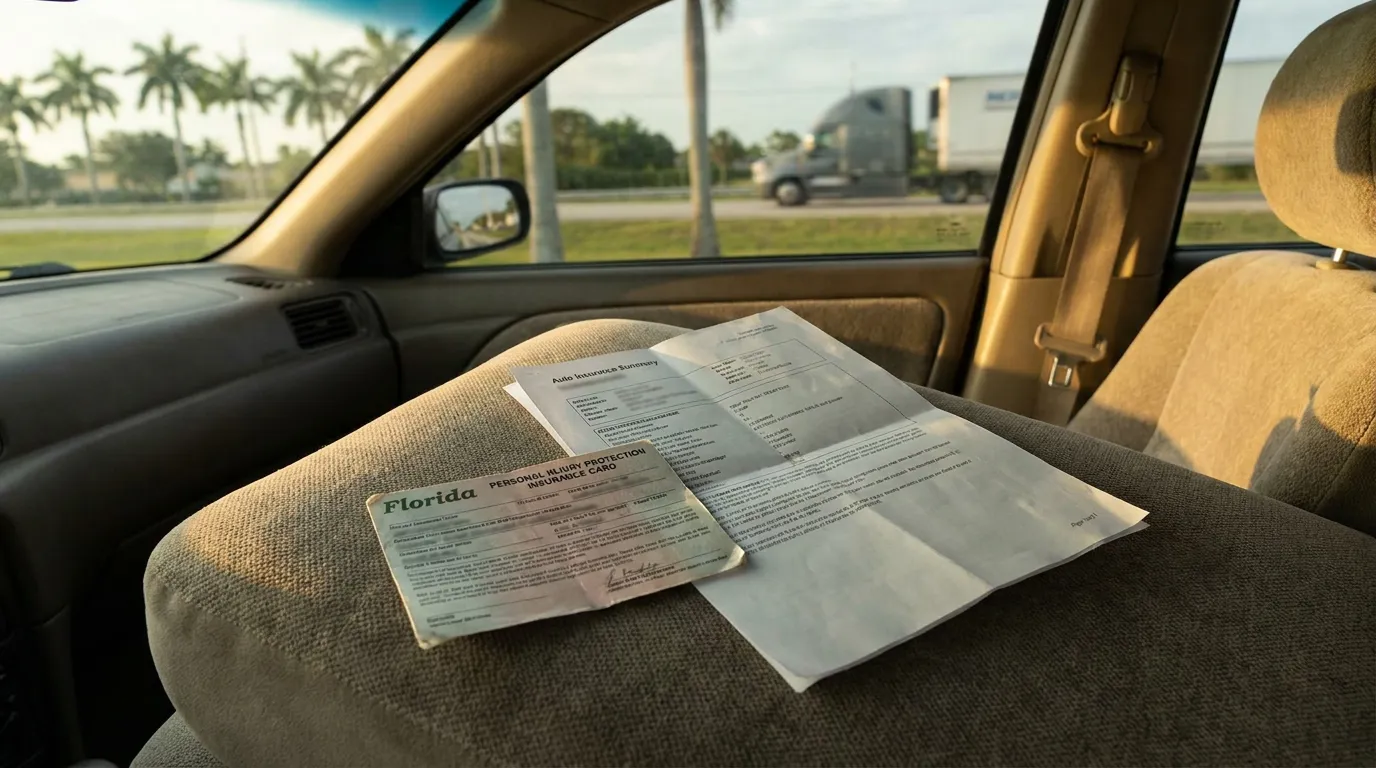
A fully loaded commercial truck can cause injuries that a $10,000 Personal Injury Protection policy simply cannot absorb. Under Florida's no-fault law, PIP provides up to $10,000 in combined medical and disability benefits, with a separate $5,000 death benefit. For anyone hurt in a serious Broward County collision, coverage typically disappears within days of hospitalization.
If you or a loved one was injured in a crash with a commercial truck, reach out to the team at Englander Peebles, call us today for a free consultation at 954-226-9134, or send a message through our online contact form to learn about your options.
Why the PIP Minimum Runs Out So Fast
Florida's no-fault insurance pays first, but it pays partially and quickly reaches its ceiling. PIP covers immediate medical bills and a portion of lost wages regardless of fault, but the statutory formula leaves large gaps when injuries become severe.
The 20% you owe out of pocket accelerates the burn rate. PIP covers eighty percent of reasonable expenses for medically necessary medical, surgical, X-ray, dental, and rehabilitative services. You remain responsible for the other 20%, which pushes you toward the cap faster after surgeries or extended hospital stays. Full $10,000 medical benefits require a qualifying provider to certify an emergency medical condition; otherwise, benefits are limited to $2,500, with initial care required within 14 days of the crash.
Wage replacement is similarly limited. The statute provides only sixty percent of lost gross income and earning capacity per individual. Because disability benefits draw from the same $10,000 pool as medical care, a victim who misses weeks of work watches the fund shrink from both directions.
💡 Pro Tip: Keep every medical bill, wage statement, and receipt from day one. Detailed records demonstrate exactly when PIP benefits were exhausted and why additional coverage must respond.
What Florida Requires Every Driver to Carry
Florida ties PIP directly to vehicle registration. At registration, proof that PIP and property damage liability coverage were purchased must be provided. This is why nearly every motorist on I-95 carries the minimum, and why an at-fault driver's personal coverage is often far too small for a truck-crash injury.
The law compels you to maintain coverage. Florida requires policyholders to maintain PIP, which pays covered medical expenses for the policyholder, household relatives, and passengers. Letting it lapse can lead to license and registration suspension. You can read more about how these benefits work in our overview of Florida PIP coverage after a crash.
Only the state can raise the floor. By statute, if the Financial Services Commission determines cost savings have been realized, it may increase the minimum benefit requirement if additional premium equals those savings. Until that happens, $10,000 remains the baseline, rarely enough for truck crash medical bills.
How Often Do Auto Accident Settlements Exceed the Policy Limits
In serious truck-crash cases, recoveries frequently move well beyond a single small policy, though outcomes depend entirely on the facts. People often ask us how often do auto accident settlements exceed the policy limits. It happens regularly when injuries are catastrophic and multiple insurance layers exist. A $10,000 PIP policy is almost never the ceiling.
Trucks carry much larger required coverage than passenger cars. Commercial motor vehicles must carry liability coverage that scales with weight. Under Florida law, commercial motor vehicles must carry from $50,000 up to $300,000 per occurrence in combined bodily injury and property damage liability coverage based on gross vehicle weight. Federally regulated carriers may face even higher limits under 49 C.F.R. Part 387.
| Truck Gross Weight | Minimum Combined Coverage |
|---|---|
| 26,000, 35,000 lbs | $50,000 per occurrence |
| 35,000, 44,000 lbs | $100,000 per occurrence |
| 44,000 lbs or more | $300,000 per occurrence |
These figures dwarf the PIP minimum and explain the strategy behind most claims. Identifying every liable party matters. A knowledgeable Florida truck accident lawyer will typically pursue the motor carrier's commercial policy rather than stopping at the driver's minimal coverage.
Finding Coverage Beyond the At-Fault Driver
Florida's dangerous-instrumentality doctrine opens additional avenues of recovery. This framework can hold vehicle owners accountable even when they were not driving. Under Florida law, an owner who is a natural person and loans a vehicle to a permissive user may be liable up to $100,000 per person and $300,000 per incident for bodily injury, and where the operator is uninsured or underinsured, up to an additional $500,000 in economic damages. Federal law, including the Graves Amendment, can limit the vicarious liability of commercial rental and leasing companies.
Truck cases often involve several responsible parties. Liability may extend to the driver, carrier, maintenance company, shipper, or leasing entity. Each defendant may carry its own insurance, and each may have violated federal FMCSA safety, inspection, or hours-of-service rules that strengthen a negligence claim.
Parties that commonly hold coverage in a truck crash include:
- The truck driver's personal or commercial policy
- The motor carrier or trucking company's liability policy
- A separate owner or short-term lessor of the vehicle
- A maintenance provider or parts supplier when equipment failure contributed
- Your own uninsured or underinsured motorist coverage, if applicable
💡 Pro Tip: Ask early whether the truck was operating under a federal DOT number. Interstate carriers are subject to federal minimums substantially higher than Florida's baseline requirements.
The Death Benefit Gap in Fatal Crashes
When a truck crash turns fatal, PIP offers strikingly little. The statute caps death benefits at $5,000 per individual. For a grieving family facing funeral costs and the loss of a wage earner, a wrongful death claim against the carrier's larger policy is often the only meaningful path to recovery.
How Florida Fault Rules Shape What You Recover
Even with larger policies in play, Florida's liability rules influence the final number. The state abolished joint and several liability, so the court shall enter judgment against each party liable on the basis of that party's percentage of fault. Each defendant generally pays only its own share, making it essential to identify and pursue every responsible party.
Defendants may try to point the finger elsewhere. A trucking company can shift blame to someone not in the lawsuit, but a defendant must affirmatively plead the fault of a nonparty and must prove at trial, by a preponderance of the evidence, the nonparty's fault in causing the plaintiff's injuries.
Your own conduct can reduce, but not automatically eliminate, your recovery. Under Florida's modified comparative fault standard adopted in 2023, contributory fault diminishes proportionately the amount awarded as economic and noneconomic damages, but does not bar recovery unless your share is greater than 50%.
💡 Pro Tip: Avoid giving a recorded statement to a truck company's insurer before speaking with an attorney. Casual comments can later be used to argue a higher share of fault against you.
Why Statutory Caps Reinforce the Coverage Problem
Florida courts have confirmed that PIP itself is a limited, tightly constrained benefit. In its MRI Associates of Tampa decision, the Florida Supreme Court held that the insurer's PIP policy language was effective to authorize the use of the statutory schedule of maximum charges. This ruling illustrates why PIP coverage is inherently limited and rarely stretches to cover catastrophic truck-crash care.
Timing matters when protecting your claim. Florida's civil statute of limitations for negligence claims is generally two years for causes of action accruing after the March 2023 tort reforms. Because tolling and discovery rules apply only in limited circumstances and are never automatic, consult an attorney promptly.
Frequently Asked Questions
1. Does PIP cover me if a commercial truck hit me?
Yes, your own PIP generally responds first regardless of fault, but only up to its limits. It pays 80% of medically necessary expenses and 60% of lost wages within the $10,000 cap. Once exhausted, you must look to the truck company's liability coverage.
2. How often do auto accident settlements exceed the policy limits in truck cases?
It happens frequently when injuries are severe and several policies are involved. Commercial trucks carry far higher required coverage than the $10,000 PIP minimum, so recoveries in serious cases often reach into larger commercial layers.
3. Who besides the driver can be held responsible?
Motor carriers, vehicle owners, lessors, maintenance providers, and shippers may all share liability. Florida's dangerous-instrumentality doctrine and federal trucking regulations can expand the pool of responsible parties. Identifying each one early helps maximize available coverage.
4. What if I was partly at fault for the crash?
You may still recover as long as your share of fault is not greater than 50%. Your compensation is reduced by your percentage of responsibility. Because insurers often exaggerate a victim's fault, documenting the scene and getting legal guidance early can protect your position.
5. How long do I have to file a truck accident claim in Florida?
The civil deadline for negligence claims is generally two years, with limited exceptions. Courts read those exceptions narrowly, so waiting can jeopardize your rights. Speaking with an attorney soon after the crash helps preserve evidence and meet every deadline.
Protecting Your Recovery After a Broward County Truck Crash
The $10,000 PIP minimum is a starting point, not a limit on what a truck-crash victim may need. Between the 80% medical cap, the 60% wage benefit, and the modest death benefit, Florida's no-fault coverage rarely covers the true cost of a serious commercial-vehicle collision. Real recovery depends on reaching the carrier's larger liability policy and every other responsible party's coverage. Early investigation and prompt legal guidance make a meaningful difference.
If a truck crash has left you facing mounting bills and difficult questions, reach out to our Fort Lauderdale personal injury attorneys at Englander Peebles for guidance tailored to your situation. Call 954-226-9134 today, or contact us now to schedule your free consultation.