Understanding How Lyft Insurance Works After a Crash in Broward County
Key Takeaways: The $1 million Lyft policy is primary liability coverage applying only during a "prearranged ride", from accepting a request until the passenger exits. Under Section 627.748, this covers death, bodily injury, and property damage, satisfied by the driver's insurance, Lyft's policy, or both. When the app is on but no ride is accepted (Period 1), lower limits of $50,000/$100,000/$25,000 apply. If a driver's personal policy lapses or excludes rideshare activity, Lyft's coverage responds from the first dollar. Florida's no-fault system means your PIP benefits apply first, with liability and uninsured motorist coverage layered on top. Identifying the correct coverage period requires app data and timing evidence.
The $1 million Lyft policy is the high-tier liability coverage that applies when a Lyft driver is actively transporting a passenger or driving to pick one up. In Florida, this coverage only kicks in during a "prearranged ride" window. If you were hurt in a Lyft crash in Fort Lauderdale, knowing which coverage period applied at the collision moment can make an enormous difference in available compensation.
Broward County accident victims often ask why insurance after a rideshare wreck feels so complicated. Florida law layers the driver's personal policy on top of Lyft's commercial coverage, and the amount available shifts depending on what the driver was doing when the crash happened. Below, we break down each coverage tier, when the $1 million applies, and what steps protect your claim.
If you have questions about your specific situation, the team at Englander Peebles is ready to help. Call us today for a free consultation at 954-226-9134, or reach out through our contact page.
What the $1 Million Lyft Policy Actually Covers
The $1 million policy is primary automobile liability coverage that applies while a Lyft driver is engaged in a prearranged ride. Under Section 627.748(7)(c)(1)(a), Florida requires primary automobile liability coverage of at least $1 million for death, bodily injury, and property damage during this period. This requirement may be satisfied by the driver's policy, the TNC's policy, or a combination of both.
A "prearranged ride" has a precise legal meaning. Under Section 627.748(1)(b), the ride begins when a TNC driver accepts a ride requested through a digital network and ends when the last rider exits the vehicle. The $1 million coverage generally applies from the moment the driver taps "accept" until you step out at your destination.
Section 627.748(7)(c)(2) allows this requirement to be satisfied by insurance maintained by the TNC driver, the TNC, or both. You can read the full statutory framework in Florida's transportation network company insurance statute.
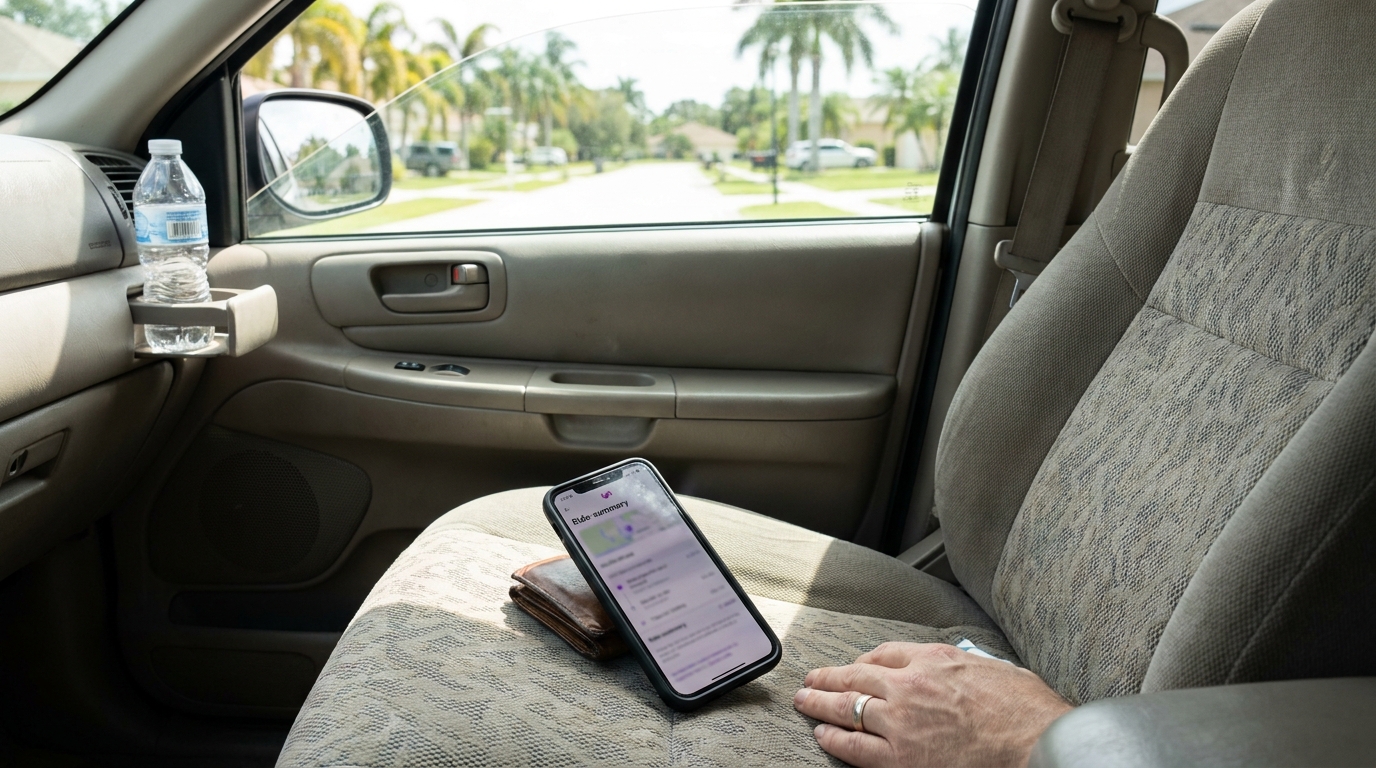
💡 Pro Tip: Save a screenshot of your Lyft ride receipt and trip status immediately after a crash to establish that a prearranged ride was in progress.
The Lyft Coverage Periods Explained
Florida law establishes two statutory coverage tiers based on the driver's status: one when the driver is logged onto the digital network but not engaged in a prearranged ride, and one when the driver is engaged in a prearranged ride. Industry and practitioner convention often subdivides the prearranged ride tier into two 'periods' (en route to pick up and passenger in vehicle), but the statute itself treats those together. Section 627.748(7) establishes these tiered insurance obligations for TNCs operating in Florida.
Understanding lyft liability coverage periods helps clarify why similar-looking crashes can produce very different insurance outcomes:
| Coverage Period | Driver Status | Minimum Required Coverage |
|---|---|---|
| Period 1 | App on, no ride accepted | $50,000 / $100,000 / $25,000 |
| Period 2 | Ride accepted, en route to rider | $1 million |
| Period 3 | Passenger in vehicle | $1 million |
During Period 1, the driver is available but has not accepted a request, and lower coverage applies. Under FL § 627.748(7)(b), while a TNC driver is logged on but not engaged in a prearranged ride, minimum coverage is $50,000 per person, $100,000 per incident, and $25,000 for property damage, satisfiable by the driver, vehicle owner, TNC, or a combination. This tier sits far below the $1 million threshold.
Both statutory tiers require more than just liability protection. Sections 627.748(7)(b)(1)(b)-(c) and (7)(c)(1)(b)-(c) require PIP benefits and uninsured/underinsured motorist coverage in addition to liability. Because Florida operates under a no-fault system, your own PIP benefits generally apply first. For a deeper look at how these layers interact, see our guide on what insurance applies after a rideshare crash.
When the Driver's Personal Insurance Comes Into Play
A Lyft driver's personal auto policy and Lyft's commercial policy do not always cover the same dollar of a claim. Under Section 627.748(7)(d), if the TNC driver's insurance has lapsed or does not provide required coverage, the insurance maintained by the TNC must provide coverage beginning with the first dollar of a claim.
This "first dollar" rule is an important protection for injured people. As reflected in F.S. 627.748(7)(c)(2), required coverage may be satisfied by insurance maintained by the TNC driver, the TNC, or both. A gap in the driver's personal policy does not automatically leave you without recovery, though confirming which carrier is responsible often requires careful investigation.
💡 Pro Tip: Don't assume the driver's personal insurer will cover a rideshare crash. Many personal auto policies exclude commercial activity.
How Employer Liability Rules Can Affect a Lyft Crash Claim
Florida's ridesharing statutes contain provisions that may shape how a claim is argued. Under FL § 768.091(2), an employee is deemed within the course of employment when performing duties assigned by the employer or acting in furtherance of the employer's business. When a driver is on a Lyft-dispatched ride, this framing may support a claim tied to the active ride. The statute's subsection (2) defines when employment commences and terminates for ridesharing purposes and when an employee is deemed within the course of employment, and questions of employer liability are fact-specific and often contested.
You can review the broader chapter on negligence and employer liability for full statutory language.
Why a Fort Lauderdale Lyft Accident Lawyer Matters for Your Claim
Pinning down the correct coverage period is rarely simple, which is where guidance from a fort lauderdale lyft accident lawyer becomes valuable. Determining whether a driver had accepted a ride, was waiting for a request, or was offline often depends on app data, dispatch records, and timing that the rideshare company controls. A skilled rideshare accident attorney in Broward County can help request and preserve that evidence before it disappears.
Early action protects more than just the coverage analysis. Documenting injuries, securing the police report, gathering witness statements, and obtaining prompt medical care all strengthen a lyft passenger injury claim in Florida. To learn more about how we handle these matters, visit our rideshare accident representation page.
💡 Pro Tip: Florida follows modified comparative negligence (effective March 24, 2023 under HB 837), meaning you may still recover damages if you are 50% or less at fault, with recovery reduced by your proportion of fault; however, a party found to be more than 50% at fault is barred from recovering damages (medical malpractice exceptions apply). Avoid admitting blame at the scene.
Keep these practical steps in mind after a rideshare collision:
- Seek medical attention right away, even if injuries feel minor
- Photograph the scene, vehicles, and visible injuries
- Screenshot the Lyft app showing the trip and driver details
- Collect names and contact information for any witnesses
- Contact a rideshare accident attorney before giving recorded statements
Frequently Asked Questions
1. Does the $1 million Lyft policy apply if I was just getting picked up?
Generally, yes. Once the driver accepts your ride request, the prearranged ride period begins, and higher coverage typically applies even before you enter the vehicle. Confirmation of the driver's app status matters.
2. What if the Lyft driver was logged in but had not accepted a ride?
In that situation, the lower Period 1 limits of $50,000 per person, $100,000 per incident, and $25,000 for property damage apply rather than the $1 million policy. This distinction significantly affects available compensation.
3. How long do I have to file a Lyft crash claim in Florida?
For most negligence claims arising from crashes on or after March 24, 2023, Florida's statute of limitations is two years from the accident date. Tolling provisions under FL § 95.051 may pause the clock in narrow circumstances, but courts interpret these exceptions strictly. Confirm your deadline with an attorney promptly.
4. Does my own insurance pay first after a rideshare crash?
Because Florida is a no-fault state, your PIP benefits generally apply first regardless of who caused the crash. Lyft's liability coverage and uninsured motorist protection may then apply depending on the coverage period and injury severity.
5. Can I still recover if the Lyft driver's personal policy denied coverage?
Often, yes. When a driver's personal insurance has lapsed or excludes rideshare activity, Florida law requires the TNC's coverage to respond from the first dollar of a claim. Identifying the responsible carrier requires careful policy review.
Protecting Your Recovery After a Broward County Rideshare Crash
The $1 million Lyft policy is a powerful protection, but it applies only during the prearranged ride period, which is why every detail of timing and app status counts. From the lower Period 1 limits to the first-dollar backstop coverage when a driver's personal policy falls short, Florida's layered rideshare insurance rules can be confusing for anyone focused on healing. Understanding which tier applies, preserving evidence early, and acting within applicable deadlines all play a role in pursuing deserved compensation.
You don't have to sort through these insurance layers alone. Reach out to our Fort Lauderdale personal injury attorneys at Englander Peebles to discuss what happened and how we may help. Call 954-226-9134 or send us your details online for a free consultation today.