Understanding Florida's No-Fault System After a Crash
Key Takeaways: Florida is primarily a no-fault state where your Personal Injury Protection (PIP) coverage pays first for medical bills and certain lost wages after a crash, regardless of fault. PIP provides up to $10,000 in medical and disability benefits, covers 80 percent of reasonable medical charges, and requires initial treatment within 14 days. You can step outside the no-fault system and sue the at-fault driver when injuries meet the serious-injury threshold. Under Florida's modified comparative fault rules, your recovery is reduced by your share of blame, and being more than 50 percent at fault bars recovery entirely. Most lawsuits must be filed within two years, so acting promptly and documenting everything is essential.
If you were just hurt in a collision, you are probably wondering who pays your bills and whether you can hold the other driver responsible. Florida is a no-fault state, meaning your own auto policy steps in first to cover certain losses, regardless of who caused the wreck. This fact shapes every decision you make after a crash, from where you seek treatment to whether you can file a lawsuit. Understanding the Florida no fault insurance meaning early protects both your health and legal rights.
If you are facing medical bills, lost wages, or a delayed insurance claim, reach out to the team at Englander Peebles, call us at 954-226-9134, or send a message through our online consultation form.
Is Florida an At Fault State or a No-Fault State?
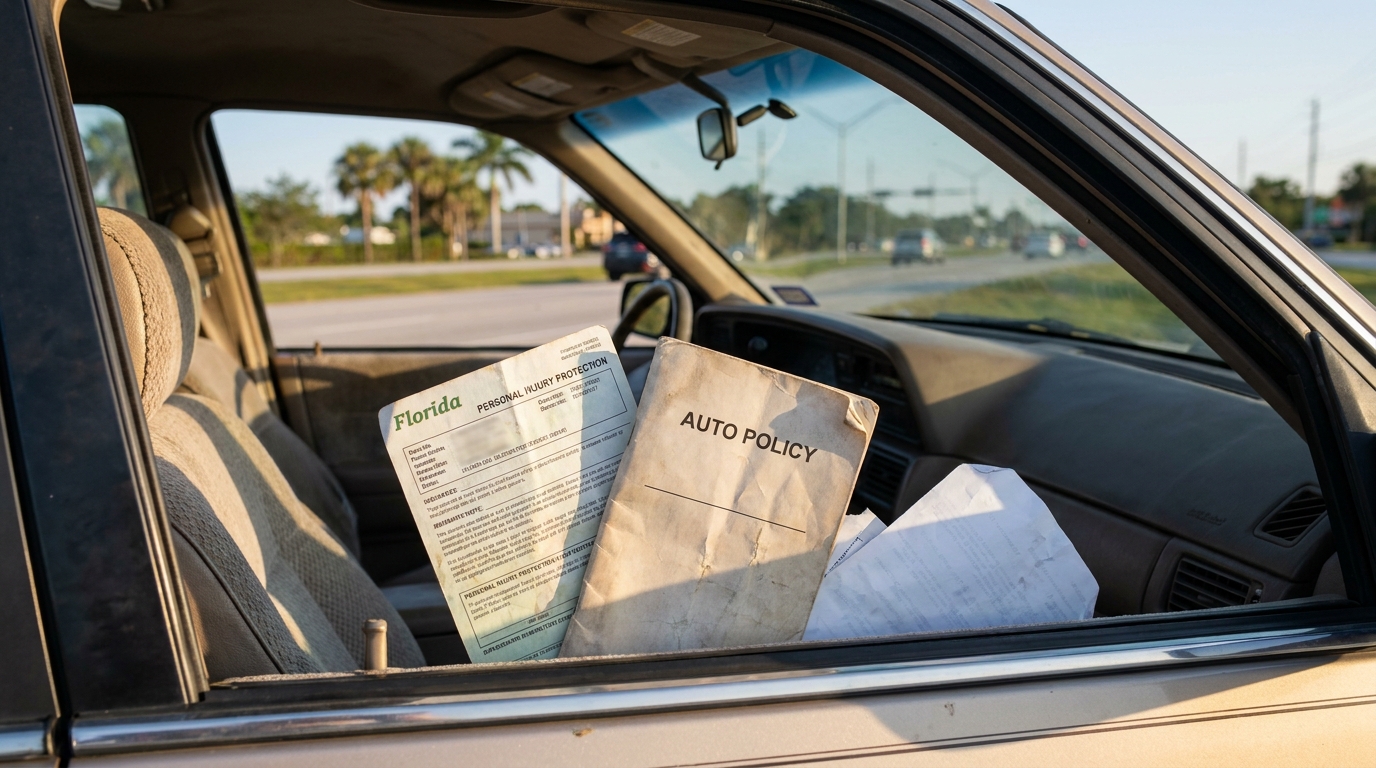
The most common question is "is florida an at fault state," and the answer is that it is primarily a no-fault state with important exceptions. Under the Florida Motor Vehicle No-Fault Law, your Personal Injury Protection coverage pays first for medical care and certain lost income after a crash, regardless of fault. Florida law requires every motor vehicle owner to maintain PIP under Fla. Stat. § 627.7407(1) and § 627.7407(4). Failing to maintain coverage can result in suspension of your driver license and vehicle registration.
Fault never fully disappears from the picture. When injuries are serious enough, an injured person can step outside the no-fault framework and pursue a traditional fault-based claim against the at-fault driver. So whether Florida is an at fault state does not have a simple answer. It is no-fault for first-dollar benefits, but fault becomes central when a case crosses the serious-injury threshold.
💡 Pro Tip: Pull a copy of your auto policy declarations page after a crash. Knowing your PIP limits and deductible helps you anticipate what will be covered.
What PIP Coverage Actually Pays For
PIP is the heart of Florida's no-fault system and covers more people than many realize. Under Fla. Stat. § 627.736(1), a policy must provide protection to the named insured, relatives residing in the same household, the person operating the insured vehicle, passengers, and pedestrians struck by the vehicle.
The benefits are capped and conditional. PIP generally provides up to $10,000 in medical and disability benefits and $5,000 in death benefits. It covers 80 percent of reasonable charges for medically necessary care, but only if you receive initial services within 14 days of the accident under Fla. Stat. § 627.736(1)(a). Disability benefits generally cover 60 percent of lost gross income and lost earning capacity. You can read more in our guide to personal injury protection in Florida crashes.
Real limits catch people off guard. If a qualified provider determines you did not have an emergency medical condition, reimbursement may be capped at $2,500 instead of the full $10,000 under Fla. Stat. § 627.736(1)(a)4. Massage therapy and acupuncture are excluded from PIP medical benefits entirely under Fla. Stat. § 627.736(1)(a)5. These details, drawn from Florida auto insurance rules, explain why two people in the same crash can have very different coverage outcomes.
Here is a quick overview of common PIP figures:
| PIP Feature | General Rule |
|---|---|
| Medical/disability limit | Up to $10,000 |
| Death benefit | $5,000 |
| Medical reimbursement rate | 80% of reasonable charges |
| Lost wage rate | 60% of lost income |
| Treatment deadline | Within 14 days |
| Optional deductibles | $250, $500, or $1,000 |
Drivers also have choices that affect coverage. Under Fla. Stat. § 627.739(2)-(3), insurers must offer deductibles of $250, $500, and $1,000, and may offer an option to exclude lost-wage coverage for a lower premium. Think carefully before waiving wage benefits, as that decision can leave a gap when you need income protection most.
💡 Pro Tip: After receiving notice of your accident, your insurer must mail you a notice of your PIP rights within 21 days under Fla. Stat. § 627.7401. If you never receive it, request it in writing.
When You Can Step Outside the No-Fault System
No-fault benefits are not the end of the road when injuries are severe. Florida allows an injured person to pursue a fault-based lawsuit against the at-fault driver when injuries meet the statutory serious-injury threshold under Fla. Stat. § 627.737. These cases can seek damages that PIP does not cover, including full lost wages, future medical care, and pain and suffering.
Timing is critical. Crash victims who qualify to file a personal injury lawsuit generally must do so within two years of the accident under Fla. Stat. § 95.11(5)(a), for claims accruing on or after March 24, 2023. Courts interpret exceptions narrowly, and missing the deadline can permanently bar your right to sue, which is why acting promptly matters for any Broward County crash claim.
Who PIP Covers and Who Pays Next
Once you exhaust PIP or qualify to step outside it, the at-fault driver's liability coverage and your own additional coverages may come into play. This layering becomes complex in rideshare crashes, where an Uber or Lyft driver's personal policy and the company's commercial policy may both be involved. Truck crashes can add another layer, since federal motor carrier regulations may create additional liability avenues alongside Florida law.
How Fault Still Matters Under Comparative Negligence
Even in a no-fault state, proving who caused the crash determines how much you recover. When a serious-injury case proceeds, Florida uses a modified comparative fault system. Under Fla. Stat. § 768.81(3), a court enters judgment against each liable party based on that party's percentage of fault, and a defendant may even attribute fault to non-parties if proven by a preponderance of the evidence.
There is a hard cutoff every injured person should understand. Under Fla. Stat. § 768.81(6), a crash victim found to be more than 50 percent at fault may not recover any damages, though this bar does not apply to medical negligence actions. This is why fault determination stays critically important, even in a no-fault framework. The rules governing modified comparative fault reward thorough, early evidence gathering.
Strong documentation is your best protection against a fault dispute. Insurers routinely argue that an injured person shares blame to reduce a payout. Preserving the right evidence early makes the difference between a fair recovery and a reduced one.
Consider preserving the following after a crash:
- The official police or crash report and the responding officer's information
- Photographs of vehicle damage, the scene, road conditions, and visible injuries
- Names and statements from witnesses
- All medical records, bills, and treatment notes
- Surveillance or dashcam footage and relevant phone records
💡 Pro Tip: Do not give a recorded statement to the other driver's insurer before speaking with an attorney. Casual remarks can be used to argue you were partly at fault.
Protecting Your Claim After a Fort Lauderdale Crash
Accident victims in Broward County often ask how to keep a no-fault state car accident claim from falling apart. The answer starts with prompt medical care, both for your health and to satisfy the 14-day PIP treatment window. Consistent treatment also builds the medical record needed to show your injuries are serious and connected to the crash.
Early legal guidance helps you avoid costly missteps. South Florida insurers move quickly to limit what they pay. A knowledgeable Fort Lauderdale car accident attorney can help you preserve evidence, meet deadlines, and evaluate whether your injuries may justify a claim beyond PIP limits.
Deadlines That Can Make or Break Your Case
Keeping track of overlapping timelines is one of the hardest parts of a crash claim. The 14-day treatment rule, the insurer's 21-day notice obligation, and the two-year lawsuit deadline all run on different clocks. Confusing them can quietly damage an otherwise strong claim.
Frequently Asked Questions
1. Does no-fault insurance mean I cannot sue the other driver?
Not necessarily. No-fault PIP pays first, but you may step outside that system and sue when your injuries meet the serious-injury threshold under Fla. Stat. § 627.737.
2. What happens if I am partly to blame for the crash?
You may still recover, but your damages can be reduced. Florida applies modified comparative fault, and under Fla. Stat. § 768.81(6) a person found more than 50 percent at fault cannot recover damages.
3. How long do I have to file a car accident lawsuit in Florida?
Generally two years from the date of the accident under Fla. Stat. § 95.11(5)(a), for claims accruing on or after March 24, 2023. It is wise to consult an attorney well before the deadline approaches.
4. Does PIP cover passengers and pedestrians?
Often, yes. Under Fla. Stat. § 627.736(1), PIP can extend to household relatives, the vehicle's operator, passengers, and pedestrians struck by the insured vehicle.
5. What if my injuries were not treated within 14 days?
This can limit or eliminate your PIP medical benefits. Florida law requires initial care within 14 days under Fla. Stat. § 627.736(1)(a). If you missed that window, speak with an attorney about other potential sources of recovery.
Putting It All Together After Your Crash
Florida's no-fault system means your own PIP coverage pays first, but fault still controls whether and how much you can recover when injuries are serious. Between the 14-day treatment requirement, the $10,000 PIP cap, the comparative fault rules, and the two-year lawsuit deadline, the rules reward people who act early and document everything.
If you were injured and need clear guidance, our team is ready to help. Reach out to our Fort Lauderdale personal injury attorneys at Englander Peebles, call 954-226-9134, or request your free consultation through our secure contact page today.