Understanding Your Rights After an Injury Caused by Poor Property Security
Key Takeaways: A negligent security claim is a premises liability case arising when a Fort Lauderdale property owner's failure to provide reasonable safety measures allows a third party to harm a lawful visitor. Common venues include convenience stores, apartment complexes, and parking lots with poor lighting, broken locks, or missing cameras. These claims depend on crime foreseeability under Florida case law, while Fla. Stat. § 768.0701 requires apportioning fault among all contributors, including the owner, attacker, and sometimes the injured person. The duty owed depends on visitor status, with invitees like customers and tenants entitled to the highest protection. Florida imposes specific security requirements on convenience businesses and multifamily properties; noncompliance can support liability while substantial compliance may create a presumption against it. Fort Lauderdale's Fourth District allows a broader range of prior incidents to prove foreseeability, though modified comparative fault and a two-year filing deadline can affect recovery.
A negligent security claim arises when a property owner's failure to provide reasonable safety measures allows a third party to harm a visitor. In Fort Lauderdale, these claims often involve injuries at convenience stores, apartment complexes, and parking lots where inadequate lighting, broken locks, or missing cameras created an opening for criminal acts. When someone invites the public onto their property, they owe a duty to take reasonable steps to keep it safe. When they fall short and someone gets hurt, the law may hold them accountable.
If you were injured because a property owner ignored security obligations, the Fort Lauderdale injury attorneys at Englander Peebles are ready to help. Call us at 954-226-9134 for a free consultation, or contact us now to discuss your case. Early action protects critical evidence.
The Legal Foundation Behind Negligent Security Florida Claims
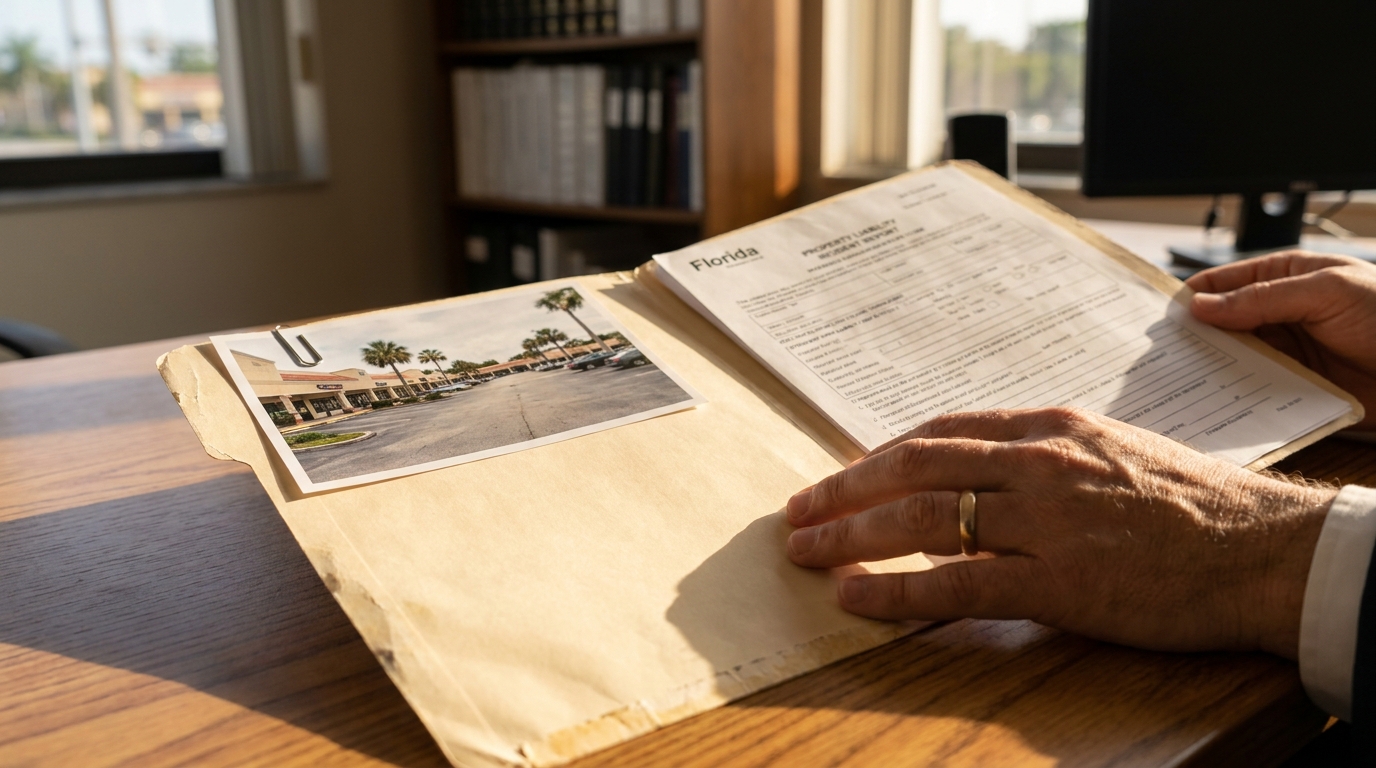
Florida law treats negligent security as a premises liability branch tied to third-party criminal acts. Fla. Stat. § 768.0701 provides that in actions against owners, lessors, operators, or managers of commercial or real property brought by persons lawfully injured by a third party's criminal act, the trier of fact must consider the fault of all contributors. Liability can be shared among the property owner, the attacker, and sometimes the injured person.
Foreseeability sits at the heart of every claim. A property owner may be liable for a crime committed by a stranger if the crime was foreseeable. Courts examine whether prior crimes, the surrounding area, and property conditions put the owner on notice that danger was likely. Review relevant statutes within Florida's negligence framework in Chapter 768 of the Florida Statutes.
💡 Pro Tip: Ask the property manager whether police have been called to that location before. A documented history of incidents is powerful foreseeability evidence.
Who Is Owed a Duty of Care on a Property
Florida classifies people on property as invitees, licensees, or trespassers, and the duty owed depends on that status. Invitees, such as customers and tenants, are owed the highest duty, including maintaining the property in a reasonably safe condition and correcting or warning of dangers. A landowner has a duty to protect invitees from reasonably foreseeable criminal attacks.
This classification determines whether you have a viable claim. If you were lawfully present at a store, gas station, or apartment complex, you were likely an invitee entitled to protection. To learn more, consult a lawyer who handles these matters in Broward County.
Security Measures Florida Requires of Convenience Businesses
Florida imposes specific security requirements on convenience businesses, and failures can support negligent security claims. Under Fla. Stat. § 812.173(1), every convenience business must be equipped with certain devices and features. When stores ignore these mandates and customers are harmed during robberies or assaults, noncompliance can demonstrate substandard care.
The statute generally requires:
- A security camera system capable of recording and retrieving images
- A drop safe or cash management device
- Parking lot lighting of at least 2 foot-candles per square foot
- Conspicuous notice that cash registers contain $50 or less
- Clear, unobstructed window views of transaction areas
- Height markers at entrances and cash management policies after 11 p.m.
Training requirements add another layer. Under Fla. Stat. § 812.174, convenience business owners must provide robbery deterrence and safety training to retail employees within 60 days of hire, using Division of Alcoholic Beverages and Tobacco-approved curriculum. Training failures can demonstrate inadequate care. Review these obligations in Chapter 812 of the Florida Statutes.
💡 Pro Tip: Photograph lighting, signage, and camera placement where you were injured. Conditions are often "fixed" quickly, and your photos may capture critical evidence.
Enhanced Measures After a Prior Violent Crime
When serious violent crimes occur at convenience businesses, Florida law demands additional safeguards. Under Fla. Stat. § 812.173(4), if murder, robbery, sexual battery, aggravated assault, aggravated battery, kidnapping, or false imprisonment occurs at a business, the operator must implement at least one enhanced measure within 30 days of a judicial determination. Options include staffing a second employee after 11 p.m., installing transparent polycarbonate safety enclosures, hiring security guards, locking premises and using pass-through windows, or closing from 11 p.m. to 5 a.m.
Ignoring enhanced steps after known crimes is compelling evidence. Properties experiencing violent incidents that do nothing afterward struggle to argue subsequent attacks were unforeseeable.
How Foreseeability Standards Vary Across Florida Courts
Florida appellate courts are split on how plaintiffs can prove foreseeability, affecting Fort Lauderdale cases. The Third District generally requires prior similar crimes in close geographic and temporal proximity. The Fourth District, covering Broward County and Fort Lauderdale, applies a more generous standard, holding that prior dissimilar crimes are relevant and admissible to foreseeability.
This distinction meaningfully shapes cases. Fort Lauderdale's Fourth District jurisdiction allows injured persons to use a broader range of prior incidents to show foreseeable danger. These standards continue evolving, so outcomes remain fact-dependent.
When Negligent Security and Slip-and-Fall Issues Overlap
Sometimes a single dangerous condition supports both negligent security and slip-and-fall theories. Dark parking lots, broken gates, or poorly maintained walkways can create conditions for both criminal attacks and falls. In slip-and-fall cases, Fla. Stat. § 768.0755 requires proving the business had actual or constructive knowledge of dangerous transitory foreign substances and failed to remedy them.
Constructive knowledge can be shown through circumstantial evidence that hazards existed long enough for careful businesses to discover them, or that they occurred regularly and were foreseeable. If your injury involved both a fall and security lapses, a Fort Lauderdale premises liability lawyer can explain how overlapping theories apply.
💡 Pro Tip: Request incident reports before leaving and record witness names. Surveillance footage is frequently overwritten within days.
Comparative Fault and Property Owner Defenses
Florida follows modified comparative fault rules that directly affect recovery. Under Fla. Stat. § 768.81(6), parties greater than 50 percent at fault for their own harm cannot recover damages. Victims 50 percent or less at fault may recover, though awards are reduced by their responsibility share. Defense attorneys frequently argue victim conduct contributed to harm.
Property owners have statutory defenses worth understanding. Under Fla. Stat. § 768.0705, convenience businesses substantially implementing security measures in §§ 812.173 and 812.174 may gain a presumption against liability, though sufficient evidence can overcome it. Similarly, Fla. Stat. § 768.0706 offers presumptions against liability for multifamily residential properties substantially implementing enumerated safeguards.
| Property Type | Example Required Measures | Statute |
|---|---|---|
| Convenience business | Cameras, drop safe, 2 foot-candle lighting, employee training | §§ 812.173, 812.174 |
| Multifamily residential | Cameras retaining footage 30+ days, 1.8 foot-candle lighting, deadbolts | § 768.0706 |
These presumptions cut both ways. Properties failing to implement required measures cannot claim presumptions and may face greater lawsuit exposure. Florida limits filing time, so timing matters; deadlines are set by statute and interpreted narrowly.
Frequently Asked Questions
1. How long do I have to file a negligent security claim in Florida?
Florida's statute of limitations for most personal injury claims is generally two years from the injury date, subject to exceptions. Courts interpret tolling and discovery exceptions narrowly. Because deadlines vary with facts, speak with an attorney promptly.
2. Who can be held responsible in a negligent security lawsuit FL victims file?
Liability may extend to property owners, lessors, operators, or managers. Under Fla. Stat. § 768.0701, the trier of fact considers all contributors' fault, including the property owner, attacker, and sometimes the injured person.
3. Does being in a high-crime area at night hurt my claim?
It can affect analysis but doesn't necessarily bar recovery. Defendants may argue comparative fault, yet Florida law allows recovery when you're 50 percent or less at fault. Each case turns on specific facts.
4. What evidence helps prove inadequate security injury cases?
Strong cases rest on property condition and history documentation. Helpful evidence includes photos of lighting and entry points, prior police reports, surveillance footage, maintenance records, and witness statements. Early preservation is critical.
5. Is a slip and fall negligent security case different from a typical fall claim?
It can involve overlapping legal theories. When security lapses like broken gates or dark walkways also cause falls, both premises liability and negligent security principles may apply, broadening recovery avenues.
Protecting Your Recovery After a Preventable Injury
Negligent security claims give injured Broward County residents a path to hold property owners accountable when inadequate safety measures lead to harm. From convenience store robberies to apartment complex assaults, Florida's statutes set clear owner expectations, and failures can support property owner liability. Because foreseeability, comparative fault, and statutory presumptions depend heavily on facts, every case deserves individualized attorney review.
If you suffered a negligent security claim Fort Lauderdale residents shouldn't face alone, reach out to Englander Peebles for guidance. Call 954-226-9134 or contact us now to schedule your free consultation. Let our Fort Lauderdale personal injury attorneys help protect your rights.