


An enjoyable day on the waters of Fort Lauderdale can change in an instant, with a sudden fall or accident at a dock, leaving you with serious questions about your future. An unsafe dock or walkway is not an accident; it’s a failure of responsibility.
Your fall may have resulted from a property owner’s negligence, and the consequences of their choices now disrupt your life. If you incur marina injuries in Fort Lauderdale, you have the right to hold that owner accountable and demand the resources you need to recover fully.
Key Takeaways for Marina Injuries in Fort Lauderdale
- Marina owners have a legal duty to maintain their property in a reasonably safe condition for visitors.
- Evidence like maintenance records, video footage, and witness statements helps prove a marina’s negligence.
- The full impact of an injury goes far beyond initial medical bills, often affecting your long-term earning capacity and quality of life.
- An injury claim’s value depends on a detailed calculation of all economic and non-economic harm you suffer.
- A boat dock accident lawyer investigates your case, builds a claim based on premises liability Florida law, and handles all communication with operators and their insurers.
The Hidden Dangers of Fort Lauderdale Marinas
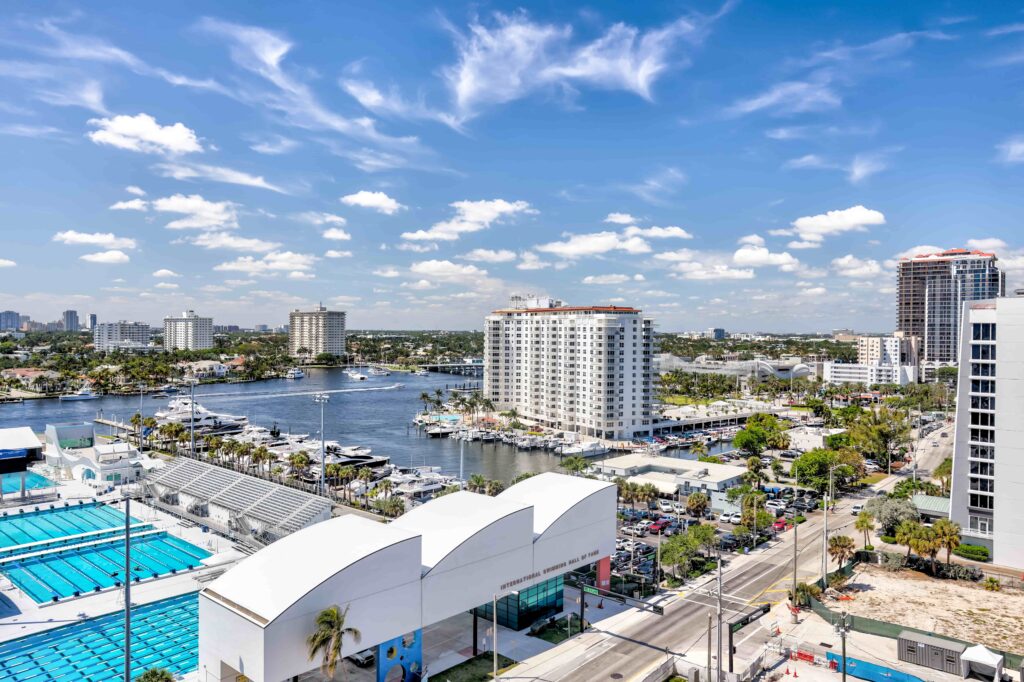
Fort Lauderdale’s reputation as the Yachting Capital of the World highlights its beautiful and numerous marine facilities. From the bustling Bahia Mar Yachting Center to the private docks lining the New River and Las Olas Isles, these properties see constant activity.
This heavy use, combined with constant exposure to saltwater and sun, creates an environment where hazards can develop quickly if owners fail in their maintenance duties.
Many people view a marina slip and fall as a simple accident. The truth is often more complex. Property owners must proactively identify and remedy potential dangers to protect guests and patrons. When they fail, people like you pay the price.
Unsafe Docks and Gangways
The very surfaces you walk on can present the greatest risk. Constant exposure to the elements degrades wood, concrete, and composite decking materials, and a property owner’s failure to perform regular inspections and repairs can lead to dangerous conditions.
A marina slip and fall often happens because of:
- Rotting Wood: Marine borers and constant moisture cause wood planks to rot from the inside out, creating structural weaknesses.
- Loose or Warped Boards: Fluctuations in temperature and humidity can cause deck boards to warp or pop loose, creating uneven surfaces.
- Slippery Surfaces: Algae, mold, and mildew thrive in damp, shady areas of docks, creating extremely slippery patches that a simple pressure washing could fix.
- Corroded Fasteners: Saltwater corrodes nails, screws, and bolts, causing railings and dock components to become unstable and fail under pressure.
Negligent Security and Inadequate Lighting
Your safety at a marina extends beyond the structural integrity of the docks. Owners must also consider factors like security and visibility, especially at night or in the early morning hours.
Poorly lit parking lots, walkways, and gangways obscure tripping hazards and can create environments for other harmful incidents. A lack of visible security personnel or functioning surveillance cameras can also contribute to unsafe conditions.
Property owners have a responsibility to assess these risks and take reasonable steps to protect visitors from foreseeable harm.
This principle of Florida premises liability law holds owners accountable for maintaining a safe environment across their entire property, from the dock slip to the parking lot.
Electrical Shock Drowning Risks
A less obvious but lethal danger lurking in marina waters is electric shock drowning (ESD). Faulty wiring from boats, shore power connections, or the dock’s electrical system can energize the surrounding water.
A person falling into this electrified water can become paralyzed, lose muscle control, and drown. Properly bonding and grounding electrical systems and installing ground-fault circuit interrupters (GFCIs) are critical safety measures.
A marina owner’s failure to maintain their electrical infrastructure exposes every visitor to a silent and deadly threat. Investigating these technical details requires specific knowledge, often central to a case involving marina injuries in Fort Lauderdale.
Proving Liability in a Fort Lauderdale Dock Accident
For a successful injury claim, your lawyer must demonstrate that the marina owner’s negligence directly caused your harm. Negligence means the owner failed to use reasonable care in managing and maintaining their property. This failure created the dangerous condition that led to your accident.
Your claim must connect the dots between the owner’s inaction and your injury. A boat dock accident lawyer helps establish this connection through a methodical and factual approach. Proving liability forms the foundation of your pursuit of compensation.
Collecting Evidence
A strong personal injury case relies on compelling evidence. Immediately after an incident, crucial evidence can be altered, repaired, or lost. An attorney works to preserve these critical elements before they disappear.
Evidence often includes:
- Photographs and Videos: Documenting the hazardous condition from multiple angles provides a clear, visual record of the danger.
- Incident Reports: An official report filed with the marina management creates a contemporaneous record of the event.
- Witness Information: Statements from others who saw the accident or the hazardous condition can corroborate your account.
- Maintenance Logs: These internal documents can reveal whether the marina knew about a problem and failed to fix it in a timely manner.
Establishing the Marina’s Duty of Care
Under Florida law, a marina operator owes a duty of care to its patrons and guests, known as invitees. This means they must regularly inspect the property for hidden dangers, repair any known hazards, and warn visitors of dangers that cannot be immediately fixed.
The beautiful marinas along the Intracoastal Waterway and Harbor Beach are not exempt from these fundamental safety rules.
Your attorney can prove owner liability in a variety of ways. First, the marina owner or staff may have created the dangerous condition. Perhaps the owner or staff were aware of the hazard and failed to address it.
Maybe the same hazard occurred with regularity, so the owner should have expected it, or it remained in place long enough for a careful owner to have discovered it during routine inspections and fixed it.
A lawyer uses specific types of evidence to establish one of four key arguments for liability:
- Creating the Hazard: Your lawyer can obtain surveillance footage or eyewitness testimony to prove that an employee’s actions directly caused the dangerous condition.
- Actual Knowledge: An attorney can subpoena internal emails, work orders, and guest complaint logs that show management knew about the specific hazard and failed to act.
- Constructive Knowledge: A lawyer can use dated photographs, witness testimony, and expert analysis to demonstrate that a hazard existed for a long time and should have been discovered during routine inspections.
- Ignoring a Foreseeable Problem: Your legal team reviews prior incident reports and repair records to establish a pattern of recurring danger, proving the owner knew the problem was predictable.
The Full Scope of Maritime Injury Damages
After establishing the marina’s liability, the next step is to determine the full value of your claim. Maritime injury damages aren’t just about reimbursing your current expenses but providing the financial resources you need to manage your new reality, now and in the future.
This calculation is one of the most critical aspects of your case. An accurate assessment accounts for every single loss stemming from the marina owner’s negligence. You don’t have to guess what your claim is worth.
Calculating Economic Losses
Economic damages represent the specific, calculable financial costs associated with your injury. These losses form the financial baseline of your claim. They include every dollar you lost or will have to spend because of the accident.
This involves collecting extensive documentation, such as:
- Medical Expenses: Every bill from hospitals, doctors, surgeons, therapists, and pharmacies related to your treatment is included.
- Future Medical Costs: Your claim can project the costs of any anticipated future medical treatment, assistive care, or home modifications you may need.
- Lost Wages: This covers the income you have already lost while being unable to work during your recovery.
- Loss of Earning Capacity: If your injury permanently affects your ability to work, this calculation covers the wages you would have earned throughout the remainder of your career.
Quantifying Non-Economic Harm
Non-economic damages compensate you for the intangible, personal losses that profoundly affect your quality of life. While these harms don’t come with a price tag, they represent a significant part of your suffering.
Placing a monetary value on them requires a deep understanding of your personal story.
A lawyer works to quantify these personal losses, which include:
- Pain and Suffering: This compensates you for the physical pain and discomfort your injuries cause on a daily basis.
- Emotional Distress: This addresses the anxiety, depression, fear, and other emotional trauma resulting from the accident and its consequences.
- Loss of Enjoyment: This acknowledges your inability to partake in hobbies, recreational activities, and life’s pleasures that you once valued.
- Disfigurement and Scarring: This provides compensation for the physical scarring or disfigurement that serves as a permanent reminder of the trauma.
How a Lawyer Helps With Marina Injuries in Fort Lauderdale

Following serious marina injuries in Fort Lauderdale, trying to handle a claim on your own while recovering adds immense stress. Insurance companies and property owners have legal teams dedicated to protecting their financial interests.
A boat dock accident lawyer provides you with the same level of dedicated advocacy, managing every aspect of your claim. This allows you to focus all your energy on your physical and emotional recovery.
Your attorney’s involvement sends a clear message that you’re serious about seeking full and fair compensation.
Here are the ways an attorney advances your case:
- Conducting a Full Investigation: Your lawyer will gather evidence, interview witnesses, and hire experts in engineering or medicine to build a fact-based case that establishes the marina’s liability.
- Calculating Your Total Damages: They can work with financial and medical planners to accurately assess the total value of your economic and non-economic damages to make certain your claim reflects the full extent of your losses.
- Handling All Communications: Your legal team manages all phone calls, emails, and paperwork with the marina’s insurance adjusters and attorneys, protecting you from tactics designed to devalue your claim.
- Negotiating a Fair Settlement: Armed with a strong, evidence-backed claim, your attorney will negotiate aggressively on your behalf to secure a settlement that fully compensates you for your life-altering harm.
FAQ for Marina Injuries in Fort Lauderdale
What Should I Do After an Accident at a Marina?
If you haven’t already done so, report the incident to the marina management in writing to create an official record. Next, write down every detail you can remember about the unsafe condition that caused your injury.
If possible, have someone safely return to the location to take photographs before the hazard is repaired. Finally, preserve the shoes and clothing you were wearing during the fall, as they can serve as important evidence.
What Makes a Fort Lauderdale Marina Liable for an Injury?
A Fort Lauderdale marina becomes liable when its negligence leads to an injury. This usually means the owner or operator knew or should have known about a dangerous condition on the property and failed to repair it or warn visitors about it.
How Do Insurers Determine Fault for Marina Injuries in Fort Lauderdale?
Fault is determined by investigating the cause of the accident. Evidence such as maintenance logs, surveillance video, witness testimony, and expert analysis helps establish whether the marina breached its duty to keep the property safe.
If your own actions contributed to the accident, your potential compensation may be reduced by your percentage of fault under Florida’s comparative negligence rule, and you may recover nothing if you were more than 50% at fault.
How Long Do I Have To File an Injury Claim in Florida?
Florida law sets a two-year deadline, known as the statute of limitations, for filing most personal injury lawsuits. Missing this deadline will permanently bar you from seeking compensation. There are some exceptions to this rule, but a lawyer can tell you the specific deadline that applies to your case.
Can I Sue a Marina for Unsafe Conditions Even if There Were Warning Signs?
Yes, you may still have a valid claim even if there were warning signs. The presence of a warning sign doesn’t automatically absolve a property owner of liability.
An attorney can evaluate whether the sign was adequately visible and whether the warning was sufficient to communicate the actual danger posed by the hazard.
Take Control of Your Recovery
The consequences of a serious injury can feel overwhelming, but you have the power to pursue justice. The team at Englander Peebles helps victims of marina accidents hold negligent property owners accountable.
Contact us through our online form to take the first step toward securing your future.